


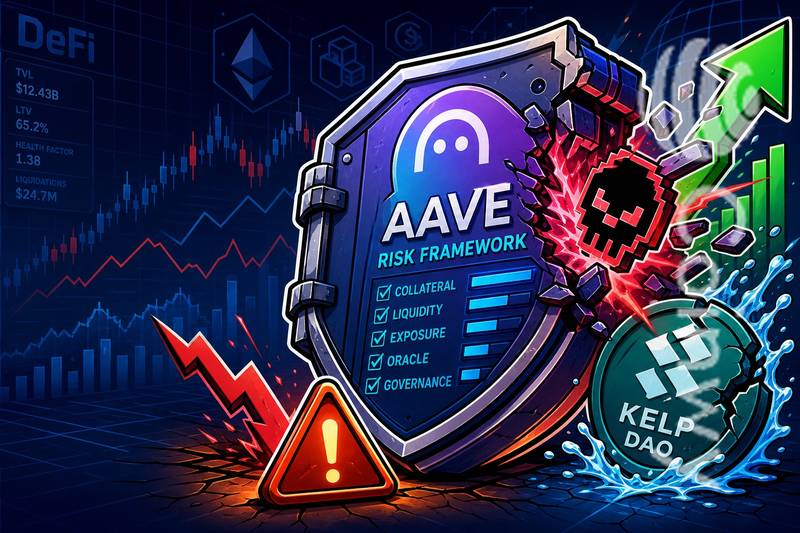
Aave governance participants are debating a new risk framework proposal following fallout from an rsETH-related exploit tied to KelpDAO, marking one of the most significant risk policy discussions on the lending protocol this year.
Why Aave Is Revisiting Risk Controls
The discussion centers on an Aave Request for Comments (ARFC) proposing a structured risk framework for the protocol. The proposal arrived as the community continues to process the consequences of an incident involving rsETH, a liquid restaking token connected to KelpDAO.
An incident report published on the Aave governance forum documented the rsETH event on April 20, 2026. The episode underscored vulnerabilities in how DeFi lending protocols handle collateral assets that depend on external restaking infrastructure.
The proposal remains at the ARFC stage, meaning it has not been finalized or submitted for an on-chain vote. Governance participants are still weighing the scope and specifics of any changes, and the framework could evolve substantially before advancing further.
What the Proposed Framework Could Change
The risk framework discussion touches on several areas central to how Aave manages protocol exposure. Collateral eligibility standards are a primary focus, particularly around liquid staking and restaking tokens that introduce dependencies on third-party protocols.
Parameter setting for supply caps, borrow caps, and liquidation thresholds could also fall under stricter guidelines. The goal is to create a more systematic process for onboarding new assets and adjusting risk parameters rather than handling each decision in isolation.
Risk isolation is another theme in the discussion. Aave already operates across multiple markets and chains, and the framework could formalize how exposure to any single asset class or protocol dependency is contained. This matters particularly for assets like liquid restaking tokens, where a single exploit can cascade across lending pools.
It is important to distinguish between the principles being debated and any final on-chain implementation. No governance vote has been scheduled, and the framework’s details remain subject to community input and revision.
What Aave Users and the Market Should Watch Next
The immediate signal to watch is whether the ARFC advances to a formal Aave Improvement Proposal (AIP) and on-chain vote. The governance forum thread will reflect any material changes to the proposal’s scope or specific provisions as the debate continues.
Borrowers and lenders using liquid staking tokens as collateral on Aave should monitor for potential changes to supply caps, borrowing parameters, or protective limits. If the framework is adopted, assets with complex dependency chains could face tighter eligibility requirements.
The broader DeFi lending sector faces similar questions. As protocols like Morpho attract significant capital and compete for market share, the standards each platform sets for collateral risk could become a key differentiator. How Aave resolves this governance debate may influence risk assessment practices across decentralized lending.
The rsETH incident also highlights an evolving challenge for DeFi security more broadly. High-profile security incidents, from protocol exploits to cases involving fraud in the crypto industry and even physical threats tied to digital assets, continue to shape how protocols and communities think about safeguards and accountability.
Disclaimer: This article is for informational purposes only and does not constitute financial or investment advice. Cryptocurrency and digital asset markets carry significant risk. Always do your own research before making decisions.
Read also :
- Morpho Raises $175M in Funding Round Co-Led by Paradigm, a16z Crypto, Ribbit
- Former Crypto Tycoon Convicted of Fraud Applies for Pardon
- DOJ: Co-Conspirator Pleads Guilty in Bitcoin Kidnapping Case
- DOJ: Missouri Man Admits Role in Cryptocurrency Robbery Scheme
- Michael Saylor Buys $101M in Bitcoin as Strategy Adds More BTC