

Key Takeaway:
- DAOs must evolve from informal coordination to accountable, legally aware governance.
- Legal wrappers define liability; courts see wrapperless DAOs as partnerships.
- Hybrid models balance decentralization with expert delegation, clarity, and enforceable responsibility.
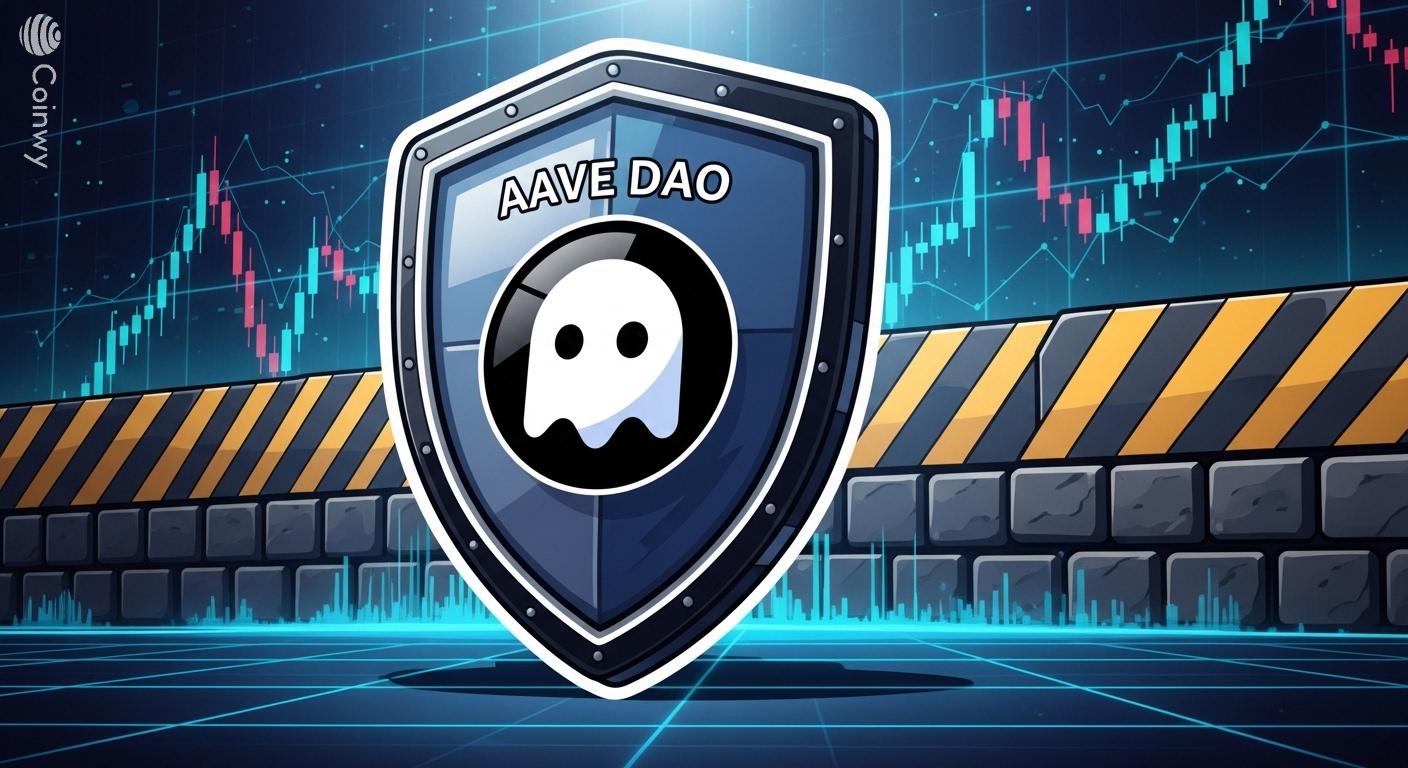
aave founder Stani Kulechov’s view that DAOs must evolve reflects a shift from informal coordination to accountable, legally aware governance. The debate centers on how aave governance balances decentralization with enforceable responsibility.
The immediate issues are who owns core assets and communications, how revenue rights are protected, and which decisions require on‑chain votes versus delegated execution. The outcome could shape tokenholder risk, operational speed, and resilience.
According to Capital Markets Law Journal, DAOs that interact with external parties likely need legal personhood or statutory wrappers to define liability and enable contracts enforceably (https://academic.oup.com/cmlj/article/doi/10.1093/cmlj/kmaf011/8249442?utm_source=openai). That framework would align decentralized voting with recognized duties.
As reported by DAOTimes, U.S. courts have treated some wrapperless DAOs as general partnerships, exposing active tokenholders to potential liability (https://daotimes.com/courts-force-daos-into-legal-accountability-as-governance-evolution-accelerates/?utm_source=openai). That precedent raises stakes for structures that rely only on informal norms.
Based on data from ABFER, evidence on vote delegation suggests outcomes improve when delegates possess expertise, aligned incentives, and accountability (https://www.abfer.org/media/abfer-events-2025/annual-conference/papers-tech-ai/AC25P10053Is-There-Wisdom-Among-the-DAO-CrowdEvidence-from-Vote-Delegation.pdf?utm_source=openai). This supports hybrid models over pure 1‑token‑1‑vote on every decision.
At Aave governance today, evolution is being defined through ownership and oversight. BGD Labs has proposed moving brand assets, domains, social channels, and naming rights, into a DAO‑controlled legal entity with safeguards against capture (https://governance.aave.com/t/arfc-aave-token-alignment-phase-1-ownership/23616?utm_source=openai). The stated aim is to reduce reliance on Aave Labs and better align incentives with tokenholders.
As reported by Odaily, Aave Chan Initiative’s Marc Zeller outlined further reforms, including stricter parameters for “friendly forks” and tighter revenue policies to protect tokenholder value (https://www.odaily.news/en/post/5206374?utm_source=openai). These proposals point to clearer boundaries and financial accountability.
Comparative perspectives matter because community disagreement often signals engagement rather than failure. As reported by Cointelegraph, Curve’s founder Michael Egorov said, “disagreement is a healthy sign in a DAO” (https://cointelegraph.com/news/disagreement-healthy-sign-dao-curve?utm_source=openai).
Practically, Aave governance could combine a DAO legal wrapper for external accountability with on‑chain controls, role charters, and transparent vote delegation. Supporters argue this preserves decentralization while enabling faster, auditable execution.
According to DAObox, a wrapper can anchor operations in law without centralizing decision power, leaving token votes and delegates in charge on‑chain (https://daobox.io/blog/how-legal-structure-turns-dao-decentralization-into-resilience?utm_source=openai). For tokenholders, the trade‑off is clearer rights and potential liability shields in exchange for more formal oversight.
Disclaimer:
Coinwy provides news and informational content related to cryptocurrency and digital assets. The information published on this site is for educational purposes only and does not constitute financial, investment, or trading advice. Cryptocurrency investments carry significant risk. Always conduct your own research and consult a qualified financial advisor before making any financial decisions.