


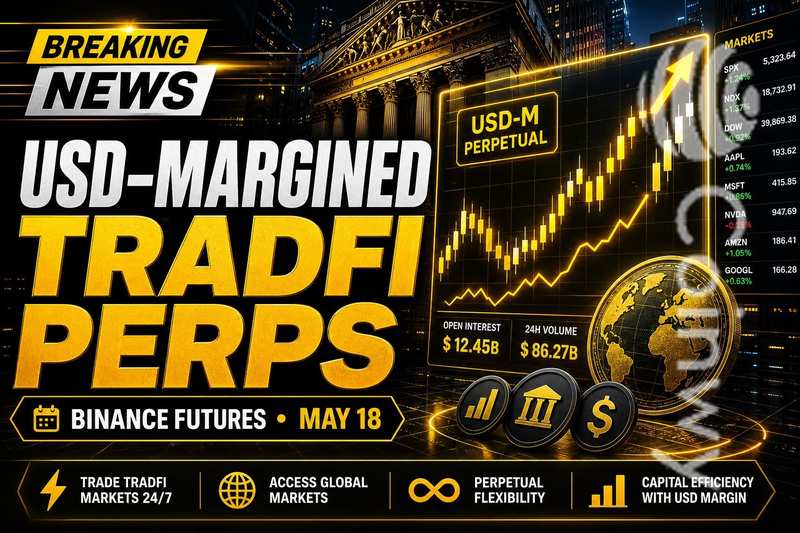
Binance Futures will launch multiple USD-margined perpetual contracts tied to traditional finance assets on May 18, expanding the exchange’s derivatives lineup beyond crypto-native trading pairs.
What Binance Futures Is Launching on May 18
The exchange confirmed through an official support announcement that multiple new perpetual contracts will go live on May 18. The contracts are USD-margined, meaning traders will post and settle in dollar-denominated stablecoins rather than the underlying asset.
Rather than a single new listing, Binance is rolling out several TradFi-linked contracts simultaneously. These products give futures traders exposure to traditional financial instruments directly through the Binance platform, without needing separate brokerage accounts.
The launch follows a broader pattern from Binance of expanding its futures announcement pipeline, which has seen a steady cadence of new contract listings through 2026.
Why TradFi Perpetual Contracts Matter for Binance Traders
TradFi-oriented perpetual contracts differ from standard crypto pairs because they track assets rooted in conventional markets, such as equities, commodities, or indices. For traders already active on Binance Futures, these listings remove the need to move capital off-exchange to access non-crypto exposure.
USD margining makes these products more accessible to traders who manage risk in dollar terms. Unlike coin-margined contracts where the collateral itself fluctuates in value, USD-margined positions offer more predictable margin requirements.
A multi-contract launch rather than a phased rollout suggests Binance is making a deliberate push into TradFi derivatives. This parallels broader industry shifts, including growing stablecoin transaction volume relative to traditional payment networks, as crypto infrastructure increasingly overlaps with conventional finance rails.
What to Watch After the Binance Futures Rollout
Early trading volume and liquidity depth will be the first signals of market demand once the contracts go live. New perpetual listings typically see volatile funding rates in their opening hours as market makers establish positions and arbitrageurs align pricing.
Traders should review the specific contract specifications before the May 18 launch, including leverage limits, tick sizes, and any promotional fee structures Binance may attach to the rollout. These details can significantly affect position sizing and trading costs.
Regulatory developments, such as the US Senate’s progress on crypto market clarity legislation, could influence how aggressively traders engage with TradFi-linked products. Institutional participants weighing large-scale capital allocation strategies may view these contracts as a bridge between crypto venues and traditional exposure.
Whether demand materializes will depend on the specific assets listed and how competitively the contracts are priced against existing alternatives in both crypto and legacy derivatives markets.
Disclaimer: This article is for informational purposes only and does not constitute financial or investment advice. Cryptocurrency and digital asset markets carry significant risk. Always do your own research before making decisions.