


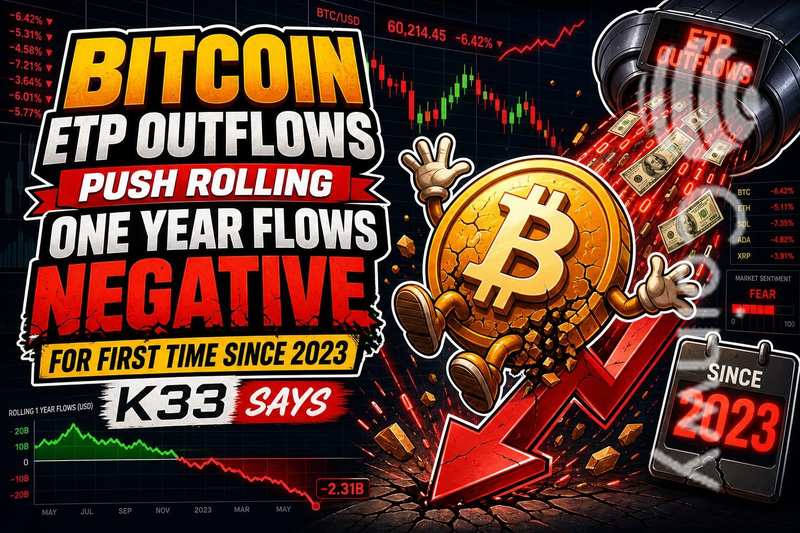
Bitcoin exchange-traded product outflows have pushed rolling one-year flows into negative territory for the first time since 2023, according to crypto research firm K33. The shift marks a notable reversal in the flow trend that had been broadly positive since spot Bitcoin ETPs launched in early 2024.
Key Takeaways
- K33 reports that rolling one-year Bitcoin ETP flows have turned negative for the first time since 2023.
- The metric tracks net inflows minus outflows over a trailing 12-month window, filtering out single-day noise.
- The finding comes amid broader shifts in Bitcoin market sentiment, though independent verification of the underlying dataset remains limited.
What K33 Is Claiming About Bitcoin ETP Flows
Bitcoin ETPs are exchange-traded products, including spot ETFs and similar fund structures, that give investors exposure to Bitcoin without holding the asset directly. Since their U.S. launch, these products have become a widely watched barometer of institutional and retail demand. For related coverage, see Trump UAE Crypto Deal Probe: Senate Democrats Push.
The rolling one-year flow metric sums net inflows and outflows across Bitcoin ETPs over a trailing 12-month period. Unlike single-day flow figures, which can swing sharply on any given session, the rolling measure smooths out short-term volatility and reflects sustained directional pressure.
K33, the Oslo-based crypto research firm, flagged the negative crossover as the first such occurrence since 2023, before spot Bitcoin ETFs were approved in the United States. The claim suggests that cumulative outflows over the past year have now exceeded cumulative inflows across the Bitcoin ETP universe.
K33 analyst Vetle Lunde, who leads much of the firm’s Bitcoin market research, has previously published analysis on Bitcoin holder profitability and ETP flow dynamics.
Why Negative Rolling Flows Are a Notable Signal
A single day of heavy ETP outflows can reflect anything from portfolio rebalancing to tax-related selling. A rolling one-year measure turning negative carries different weight because it indicates that the trend has persisted long enough to erase months of prior inflows.
For market participants, the metric serves as a proxy for broad investor appetite. Sustained positive rolling flows suggest growing demand for regulated Bitcoin exposure, while a negative reading implies that redemptions have outpaced new allocations over a meaningful time horizon.
The shift is particularly notable given the wave of new Bitcoin ETF products filed by firms like BlackRock and dividend-linked Bitcoin ETF proposals from Franklin Templeton in recent months. Product proliferation has not, according to K33’s data, been enough to keep aggregate rolling flows positive.
That said, negative rolling flows alone do not confirm a bearish market outcome. Bitcoin’s price is influenced by spot market activity, derivatives positioning, macroeconomic shifts, and on-chain dynamics that operate independently of ETP fund flows. The metric is one input among many.
What Remains Unverified
The underlying dataset behind K33’s claim, including which specific ETPs are included and the exact methodology for calculating rolling flows, has not been independently verified for this report. Readers should treat the finding as an attributed research call rather than a confirmed market fact.
Any connection between the negative flow reading and recent Bitcoin price volatility or shifting rotation patterns between Bitcoin and altcoins would require separate confirmation with verified price and volume data.
K33’s finding highlights a meaningful shift in the ETP flow trend, but the full picture, including which funds drove the bulk of redemptions and whether the trend has begun to reverse, requires additional data that is not yet available in this analysis.
Disclaimer: This article is for informational purposes only and does not constitute financial or investment advice. Cryptocurrency and digital asset markets carry significant risk. Always do your own research before making decisions.