
Key Takeaways
- Independent broker-safety assessments flag Coinlocally for operating without valid regulatory oversight, increasing perceived risk for users.
- User review platforms show predominantly negative feedback, with recurring complaints related to withdrawal freezes, KYC delays, and customer support responsiveness.
- Analysts note that the combination of regulatory gaps and unresolved user complaints has intensified scrutiny around the platform’s risk profile.
Coinlocally, a forex and cryptocurrency trading platform, is drawing increased attention after independent safety reviews and user-generated feedback raised concerns about its regulatory standing and operational practices. Broker-risk assessment platforms classify Coinlocally as high risk, citing the absence of recognized regulatory licenses and limited transparency around oversight mechanisms .
According to the safety review, Coinlocally currently operates without valid regulatory authorization, a factor commonly viewed as a significant risk indicator within the trading industry. Analysts note that the lack of oversight reduces external accountability and limits formal protections for client funds, particularly when disputes arise.
Additional scrutiny has emerged from user review platforms, where Coinlocally holds a low TrustScore based on dozens of reviews. A majority of reviewers describe negative experiences, frequently referencing withdrawals being frozen after profits, prolonged AML or risk reviews, and generic support responses that provide no clear timelines for resolution.
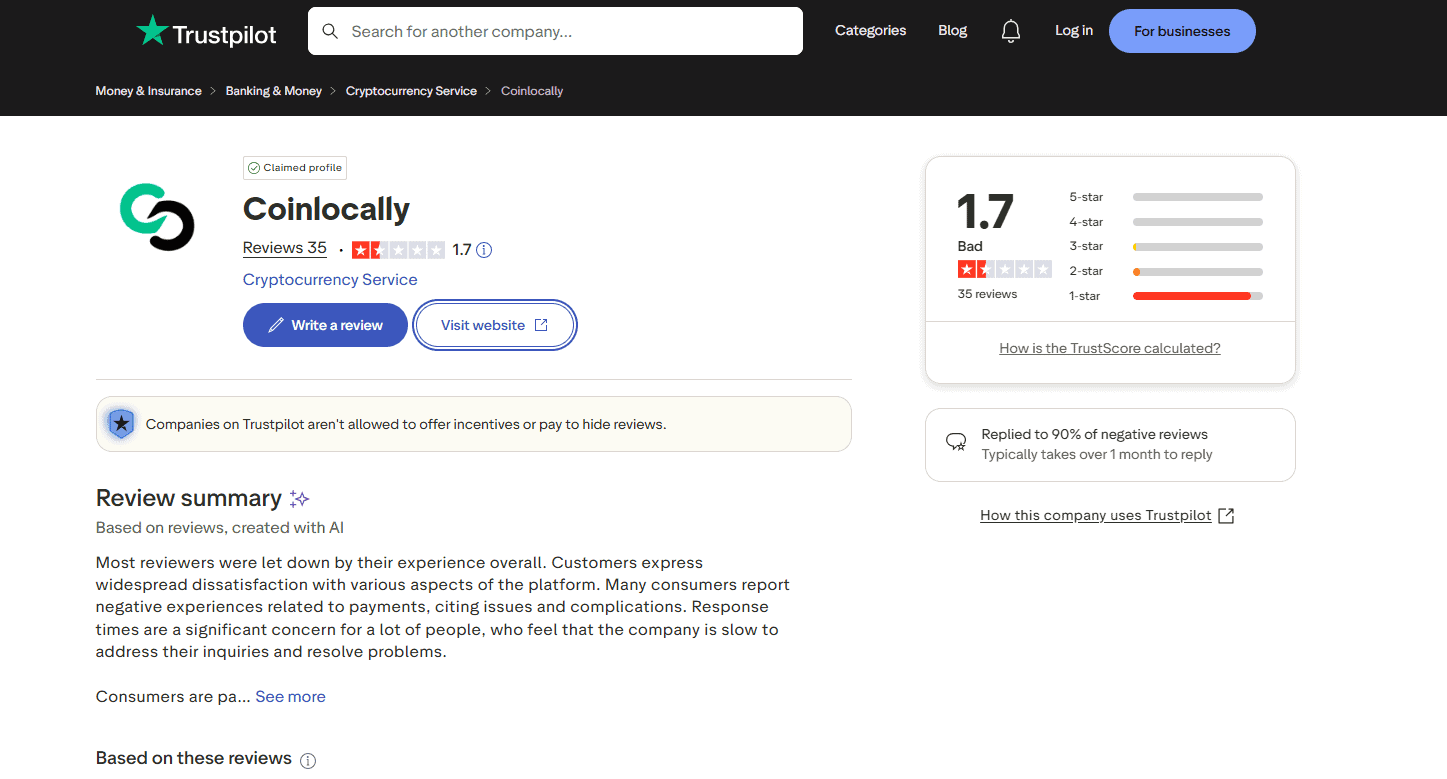
Several users report that accounts were restricted while open trading positions remained active, leading to forced liquidations during periods of high market volatility. Others claim that repeated KYC submissions did not resolve withdrawal blocks, contributing to growing frustration among affected users. While some neutral or positive reviews exist, they represent a minority compared with unresolved complaints.
The safety assessment further highlights unclear fee structures and limited disclosure around fund security, factors that may complicate risk evaluation for prospective users. Industry observers emphasize that such conditions are more commonly associated with unregulated platforms, where enforcement mechanisms are limited.
Together, the findings from independent risk reviews and user feedback illustrate a broader pattern that has prompted calls for heightened caution. Market participants stress that these signals do not constitute definitive proof of misconduct but represent material risk indicators that warrant closer examination.