

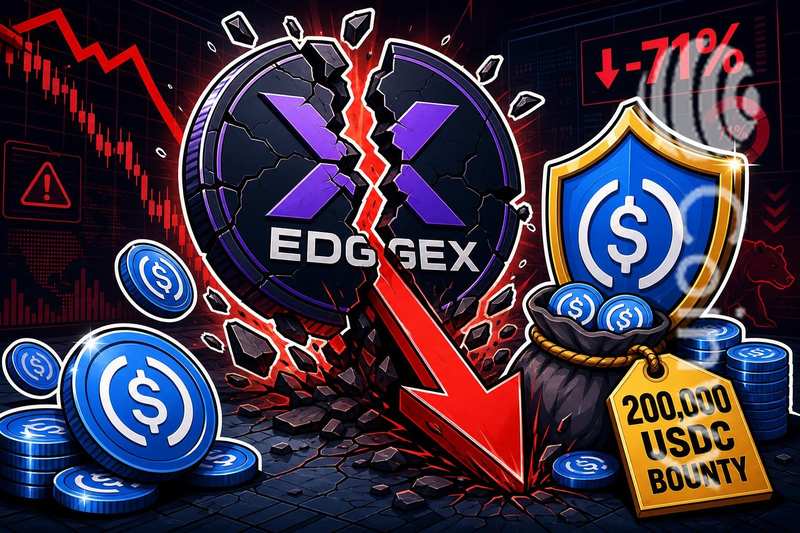
EdgeX, a decentralized exchange platform, has announced refunds for affected users and a 200,000 USDC bounty after its native token suffered a 71% flash crash, signaling an aggressive response to contain fallout from one of the sharpest single-token drops in recent months.
What triggered the EdgeX 71% token flash crash
The EdgeX token lost roughly 71% of its value in a rapid sell-off. Flash crashes of this magnitude typically unfold within minutes, wiping out leveraged positions and triggering cascading liquidations before buyers can react.
The severity of the drop prompted EdgeX to issue a public response. Projects that suffer sudden price collapses often face immediate credibility questions, and the speed of the team’s reaction suggests an effort to prevent lasting reputational damage.
Flash crashes remain a persistent risk across smaller-cap tokens, where thinner order books can amplify the impact of large sell orders or coordinated activity. The incident echoes broader concerns about security vulnerabilities in crypto platforms and the protections available to users when things go wrong.
EdgeX refund plan and 200,000 USDC bounty
EdgeX stated it would offer refunds to users affected by the crash. The refund commitment, if executed, would represent direct compensation for losses sustained during the flash crash window.
Separately, the project launched a 200,000 USDC bounty. Bounty programs in the crypto space typically serve one of two purposes: identifying the root cause of a technical exploit or incentivizing the return of misappropriated funds.
The distinction between the two measures matters. Refunds address immediate user losses, while the bounty targets accountability and recovery. Together they represent a two-pronged response that covers both compensation and investigation.
Bounties of this size have become a common incident-response tool. When exchanges and platforms face operational disruptions, structured recovery programs can help restore user trust faster than silence.
What EdgeX users and the broader market will watch next
Affected users will be looking for clarity on refund eligibility, the calculation method for losses, and a timeline for payouts. Without transparent criteria, refund promises risk appearing performative rather than substantive.
The bounty’s structure also needs detail. Whether EdgeX is seeking information about an external exploit, an internal failure, or market manipulation will shape how the community interprets the event and the project’s credibility going forward.
How quickly EdgeX delivers on both commitments will likely determine whether the project retains its user base. In an industry where trust and transparency are increasingly demanded by participants, delayed or incomplete follow-through after a crisis tends to accelerate user migration to competitors.
The EdgeX platform continues to operate while the investigation and refund process unfold. Users with exposure to the token should monitor official channels for eligibility announcements and bounty findings.
Disclaimer: This article is for informational purposes only and does not constitute financial or investment advice. Cryptocurrency and digital asset markets carry significant risk. Always do your own research before making decisions.
Read also :
- Crypto Industry Launches PAC to Protect Software Developers
- Trezor vulnerability: User Funds Stay Safe
- Binance Ends Centralized NFT Service, Sets 30-Day Withdrawal Window
- Binance Fiat Liquidity Provider Program Update on June 4, 2026
- Mastercard Plans Stablecoin Settlement for Card Payments: What It Means