






Perpetual trading cost is the sum of entry and exit fees, spread, price impact, funding or borrow, network cost and withdrawal friction. The maker or taker percentage is only one line in that calculation.
The same venue can be cheap for a small marketable order and expensive for a large or long-held position. Compare the exact market, notional, holding interval and exit path before interpreting a fee schedule.

What belongs in a perp trading cost?
Maker/taker fees are the easiest line to quote because the exchange publishes them as percentages. Maker orders may receive a lower fee or rebate, while taker orders pay for immediate execution. But a limit order that never fills is not a cheaper trade, and a marketable limit order can behave like a taker order depending on the platform’s rules.
Spread is the gap between the bid and ask. If a trader buys at the ask and later sells at the bid, the round trip pays the spread even when the fee schedule says zero. Price impact is separate: it measures how far the actual order moves from the expected quote as the trade consumes liquidity. The liquidity and slippage guide explains why visible volume cannot replace an order-size test.
Funding or borrow is the carry cost of keeping a position open. A low entry fee can be irrelevant if the position pays elevated funding for several intervals. Network, keeper and withdrawal costs also matter on onchain venues. Finally, liquidation is an extreme cost, but it should still be modeled because a venue’s margin and closeout rules determine how quickly a fee advantage can disappear.
Perpetual trading fees across the five venues
These are published schedule rates rather than guaranteed account quotations. Region, VIP status, staking, promotions, contract type and account eligibility can change the fee actually charged.
At the entry tier, Hyperliquid’s taker rate is 0.005 percentage points below Binance and OKX and 0.010 percentage points below Bybit. That lead can disappear when a wider spread or poorer fill costs more than the fee difference, so the displayed rate should be read alongside executable depth for the intended market and order size.
| Venue | Entry rate | First lower-fee tier or rule | Higher-tier context | Cost outside the headline fee |
|---|---|---|---|---|
| Hyperliquid perps | 0.015% maker / 0.045% taker | Above $5 million rolling 14-day weighted volume: 0.012% / 0.040% | Above $25 million: 0.008% / 0.035% | Spread, price impact, funding and deposit route |
| Binance USD-M Futures | 0.020% maker / 0.050% taker | VIP 1: 0.018% / 0.050% | VIP 3: 0.014% / 0.040% | Spread, funding, liquidation and withdrawal |
| OKX futures | 0.020% maker / 0.050% taker | VIP 1: 0.018% / 0.040% | VIP 3: 0.010% / 0.028% | Spread, funding, margin interaction and withdrawal |
| Bybit derivatives | 0.020% maker / 0.055% taker | VIP 1: 0.018% / 0.040% | VIP 3: 0.014% / 0.035% | Spread, funding, liquidation and custody |
| GMX standard crypto markets | 0.040% balance-improving / 0.060% balance-worsening | No volume tier; trade direction sets the position fee | Funding, borrow and price impact vary with market state | Net price impact, funding, borrow and network cost |
The centralized venues reward account qualification differently. Binance, OKX and Bybit tiers cannot be compared as if every trader automatically receives the selected higher rate; the useful figure is the tier already available to that account. Hyperliquid instead measures rolling 14-day weighted volume, making recent activity part of the calculation.
GMX does not use a comparable volume ladder. A trade that reduces the difference between long and short open interest receives the lower position fee, while a trade that increases the imbalance pays the higher rate. Net price impact is separate, and borrow can rise with pool utilization.
For positions held through multiple funding intervals, add every settled funding payment to the execution bill. Delta-neutral strategies must also subtract borrow, transfer, hedge execution and rebalancing costs from funding income. The funding-rate guide explains why a positive rate should not be presented as risk-free yield.
How perpetual exchange cost is formed
| Trader profile | First venues to compare | Cost that usually decides | Why the headline fee can fail |
|---|---|---|---|
| Small retail position | Hyperliquid, GMX, Bybit | Spread, network and minimum friction | Fixed transaction costs dominate |
| Mid-sized directional trade | Hyperliquid, Binance, OKX, GMX | Fee plus spread and funding | Two small execution losses compound |
| Large major-pair order | Binance, OKX, Hyperliquid | Depth and realized price impact | A deep book can beat a cheaper rate |
| Active maker | Hyperliquid, Binance, OKX, Bybit | Tier, rebate and cancellation | Rebate may disappear with adverse selection |
| Delta-neutral carry trade | Hyperliquid, GMX, Binance, OKX | Funding, borrow and transfer cost | Positive funding is not guaranteed yield |
Use the best perpetual exchanges pillar for the broader venue shortlist. This article answers a narrower question: which cost layers should be measured before calling a platform cheap?
Hyperliquid: low visible friction must survive onchain execution
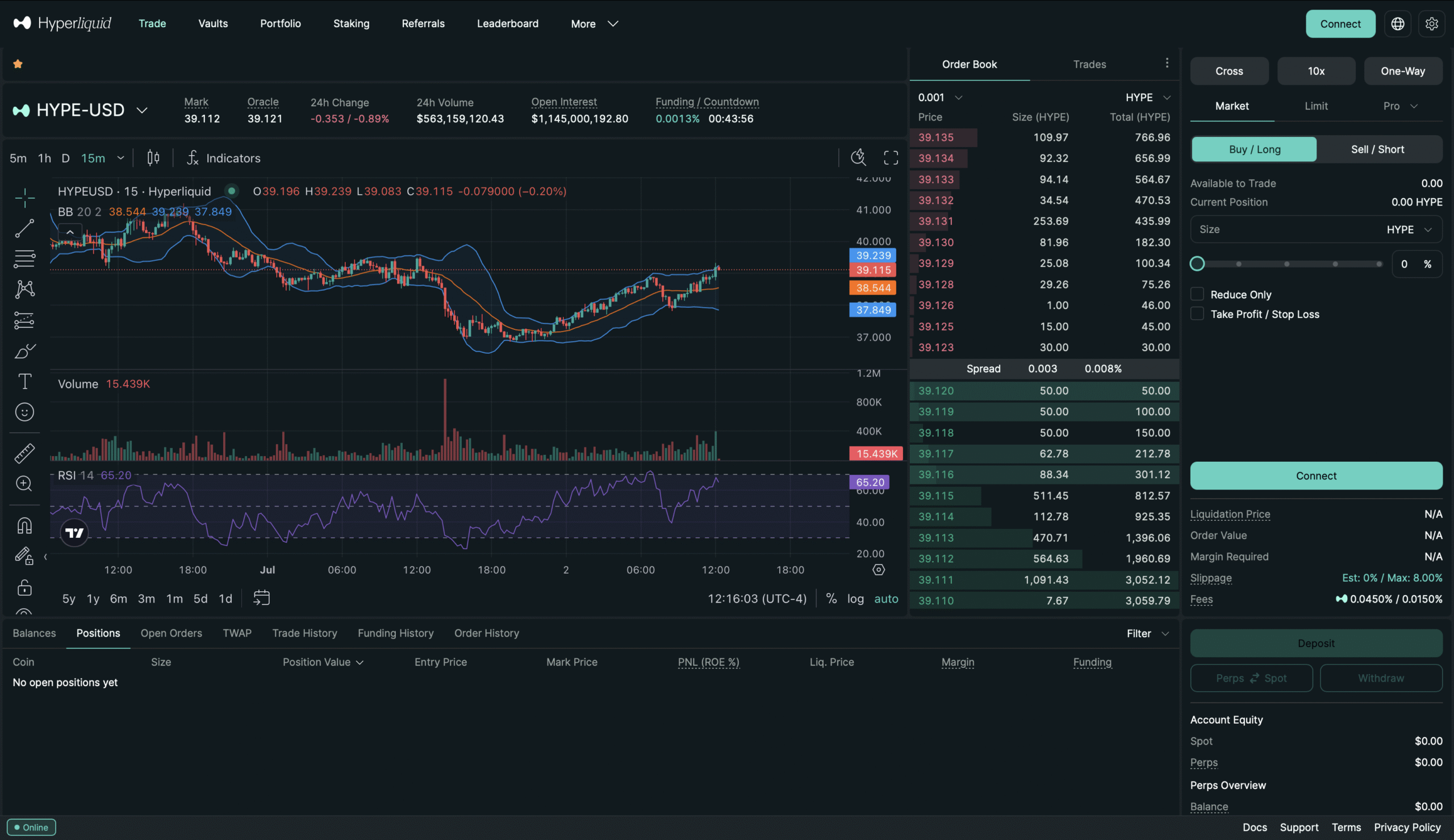
Hyperliquid is a natural candidate for a low-cost comparison because an onchain order-book workflow can reduce some conventional account friction. The user still needs to test the actual spread, fill quality, funding, network cost and withdrawal route. If the strategy is an active maker, record whether the expected maker treatment is available at the account’s actual volume and whether cancellations create adverse selection.
The maker and taker fee comparison should be read with the depth result. A maker rebate is not automatically profitable if the order fills only when the market moves against it. For a small trader, the wallet and network route may be more important than a theoretical rebate.
Pros
- The visible order book lets traders compare spread, resting depth and average fill before judging whether the fee tier is competitive.
- Limit, post-only and reduce-only workflows support lower-cost execution without forcing every order to cross the spread.
- Wallet-based access keeps the trading allocation separate from a conventional centralized exchange account.
Cons
- Thin books outside major markets can erase a low displayed fee through price impact and partial fills.
- Funding, liquidation execution and the protocol backstop remain costs or dependencies that the maker/taker rate does not show.
- Wallet compromise, deposit routing and withdrawal recovery remain the trader’s responsibility rather than an exchange-account recovery process.
A Hyperliquid trader described strong major-pair liquidity but thinner small-cap conditions in an execution comparison. That experience supports checking the intended contract’s depth instead of extending BTC or ETH assumptions to pre-market and thin-tail markets.
Binance and OKX: scale, fee tiers, and account complexity can outweigh rate
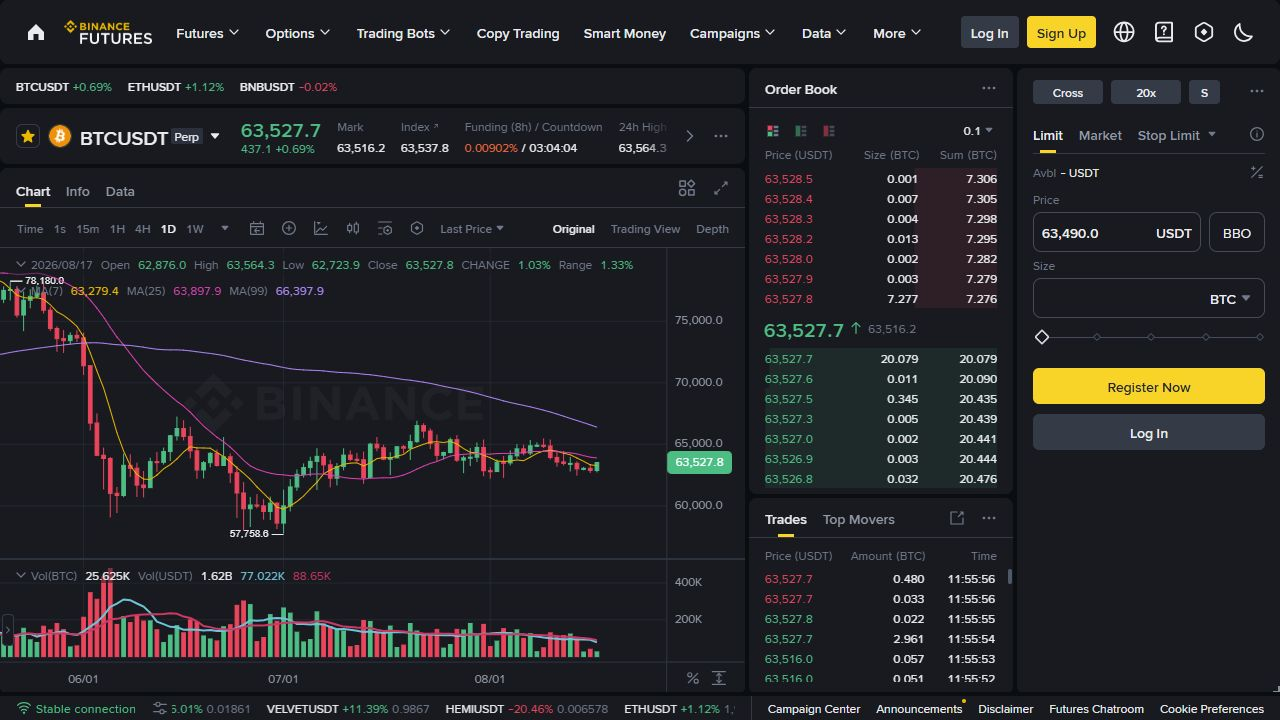
Binance Futures and OKX are the first centralized venues to test for large BTC and ETH orders. Their advantage may be usable depth and account tooling rather than the smallest displayed rate. Compare the intended order in pieces and as one marketable order, then record average fill, price impact, spread, funding and the withdrawal path.
OKX can be attractive for advanced users who understand account modes and collateral interaction. Binance can be attractive for broad contract coverage and major-pair liquidity. Both still require KYC, jurisdiction and withdrawal checks. A lower rate is not useful if the desired derivative is unavailable or the account cannot access the required margin mode.
Pros
- Binance’s deep BTC and ETH books can reduce realized impact for larger marketable orders even when another venue advertises a lower fee.
- OKX provides flexible account and margin modes for traders who need to separate isolated positions from broader portfolio collateral.
- Both venues offer broad contract coverage, mature order controls and volume-based fee tiers for genuinely active accounts.
Cons
- Product eligibility, leverage limits and contract availability vary by jurisdiction, KYC status and account type.
- Centralized custody makes account access, withdrawal approval and platform solvency part of the trading-cost decision.
- Fee tiers and multi-asset margin settings can make the apparent saving difficult to reproduce and can expose unrelated collateral to a losing position.
A trader with two years on Binance and six months on OKX said in a platform comparison that standard-tier fees felt comparable; OKX offered a cleaner workflow, while Binance retained wider token coverage. The subjective account reinforces choosing by market access and workflow rather than one fee row.
Bybit: active markets, promotions, and the realized cost of execution
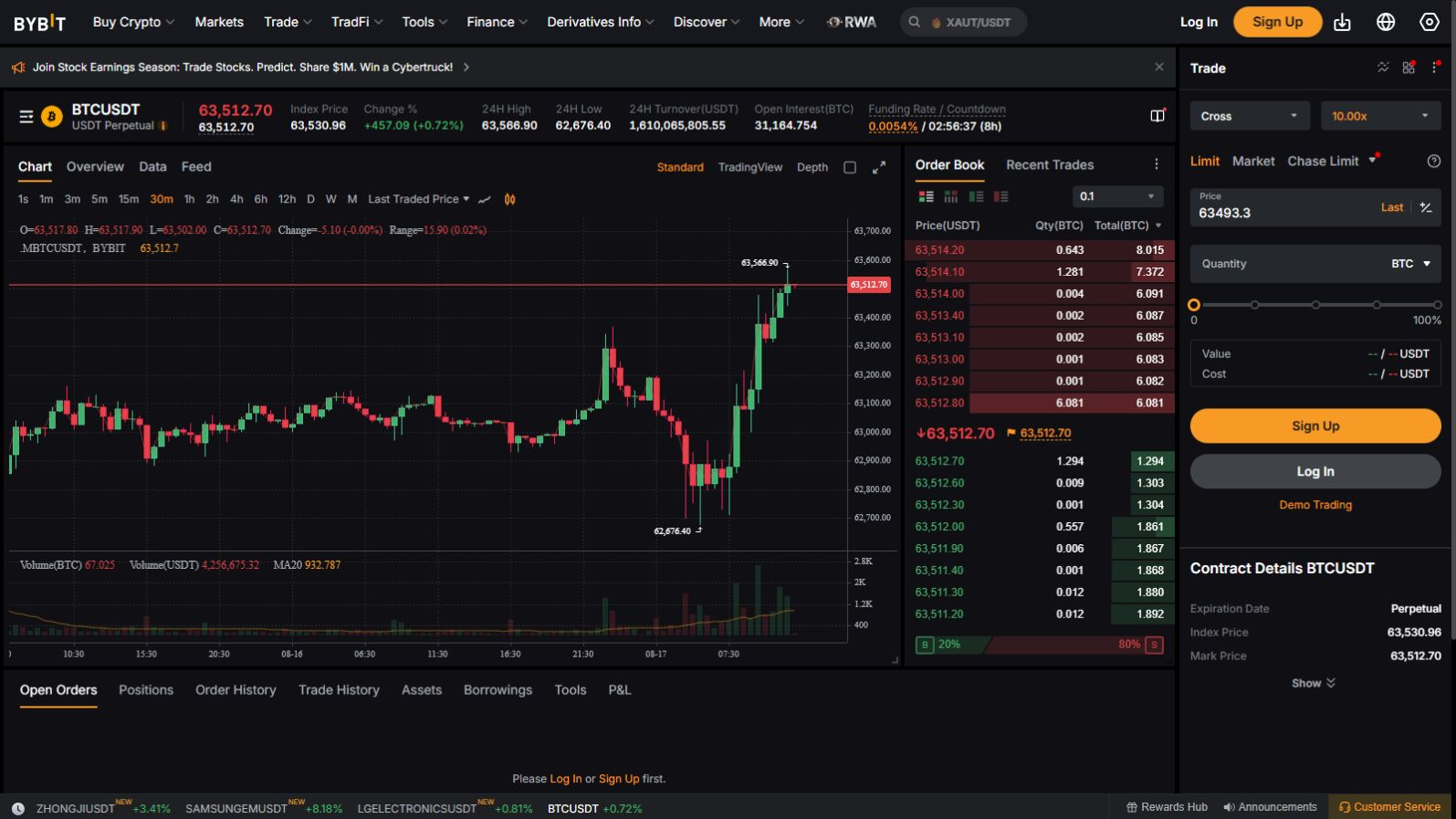
Bybit is relevant for traders who need a derivatives-focused interface and a broad altcoin comparison. The cost test should separate actual trading cost from promotional messaging. Record the contract, market depth, funding, order fill and liquidation buffer. The altcoin perpetual exchange guide is more useful than a general fee table when the chosen market is thin.
Copy-trading, grid and strategy pages can make the platform feel productive, but they do not reduce the position’s funding, spread or liquidation cost. Keep the manual round trip separate from any strategy product so the reader can see which cost belongs to the trade and which belongs to the product wrapper.
Pros
- The derivatives-focused interface keeps charting, order entry, position state and liquidation information within one trading workflow.
- Broad perpetual coverage gives altcoin traders more markets to compare without moving collateral between several venues.
- Isolated margin, reduce-only orders and integrated stop-loss or take-profit controls support a clearly bounded position plan.
Cons
- Thinner altcoin books can produce wider spreads and greater slippage than the headline maker or taker rate suggests.
- Promotional rates and trading campaigns may apply only to selected contracts, dates or account conditions.
- Centralized custody, regional restrictions and withdrawal controls remain relevant even when the trading interface is convenient.
An algorithmic trader reported in a Bybit maker-cost discussion that roughly 4 bps round trip plus a 1 bp spread allowance erased a short-horizon model’s gross edge. The account-specific result shows why high-turnover strategies must be assessed after realized fills.
GMX: compare pool fees, price impact, and borrow cost with CLOB cost
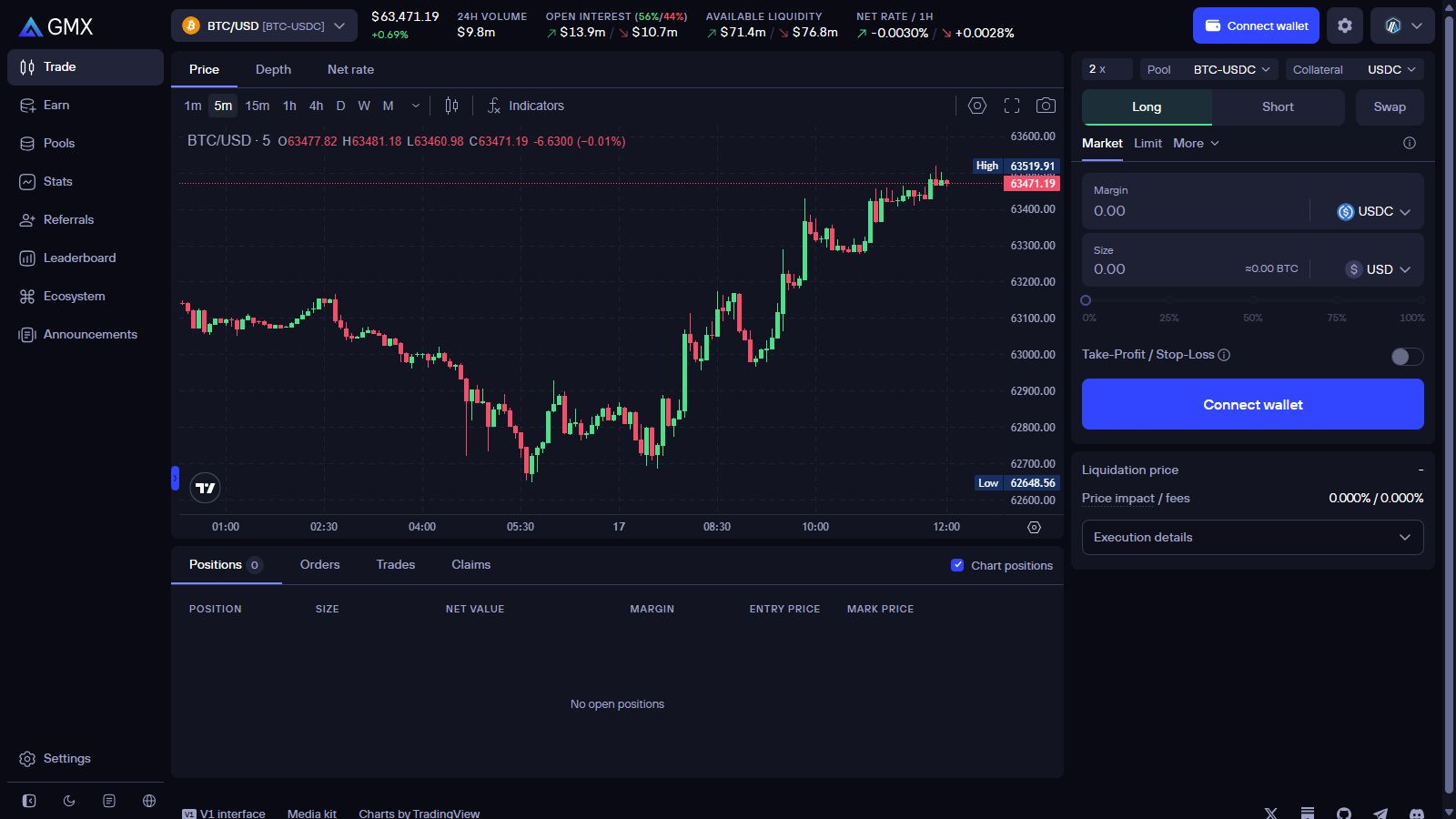
GMX should not be compared using a CEX maker/taker table alone. The public app exposes pool, collateral, price impact, execution, borrow and network cost in a different structure. A trader should record the amount expected, minimum or acceptable output, collateral token, pool state and close cost before confirming.
For a small onchain position, the pool model may be more expensive or cheaper depending on market balance and route conditions. A trader should not call GMX low-fee because the interface has no conventional maker/taker row. Use the full total-cost worksheet and compare the realized result with an order-book venue at the same notional.
Pros
- Oracle-priced pool execution avoids relying on a visible CLOB queue and can be competitive when the intended trade improves pool balance.
- The interface exposes collateral, price impact, borrow and expected position changes before the wallet confirms the transaction.
- Wallet-based access lets the trader isolate the GMX allocation from funds held in a centralized exchange account.
Cons
- Pool imbalance can increase price impact, while utilization-sensitive borrow can make a longer hold more expensive than its opening fee implies.
- Oracle and keeper dependencies introduce failure paths that cannot be evaluated from a conventional maker/taker comparison.
- Collateral choice, network cost and the close transaction add operational friction that a simple position-fee percentage omits.
In a GMX leveraged-trade cost report, a trader struggled to reconcile a ten-day BTC position’s expected loss with final P/L after borrowing and transaction costs. The older report does not establish current pricing, but it shows why leveraged notional, borrow, entry and exit charges must be reconciled from transaction history.
When a rebate is not a saving
A maker rebate is valuable only when the order fills at a price that remains competitive after adverse selection. Hyperliquid’s reviewed schedule introduces maker rebates when a user’s maker share exceeds stated rolling-volume thresholds, while the highest OKX tiers can also move maker rates below zero. A negative fee does not compensate for a quote filled immediately before the market moves against the position. The market-maker comparison treats this as a separate strategy problem.
Similarly, a zero-fee promotion can still leave spread, funding, liquidation, withdrawal or conversion costs. Promotions can expire, vary by account, or apply only to selected contracts. Every numerical claim in a publication-ready article needs the account condition, contract, capture date and limitation beside it.
Choose the lowest controllable total cost
Use Hyperliquid for an onchain order-book cost test, Binance or OKX for large major-pair execution, Bybit for active derivatives markets, and GMX when a pool and oracle workflow fits the strategy. None wins from the fee schedule alone. The winner is the venue that produces the lowest realized entry-to-exit cost while keeping funding, liquidation, custody and withdrawal risks visible.
Build the worksheet before choosing the platform. Different order sizes can produce different winners because depth and impact do not scale at the same rate as the published percentage. The cheapest venue is therefore not a brand; it is the execution route that remains cheapest after the position is opened, held, closed and withdrawn.
FAQs
Which perpetual exchange has the lowest fees?
There is no durable universal answer. Hyperliquid, Binance, OKX, Bybit and GMX can each be competitive under different account tiers and execution conditions. Compare total round-trip cost at the exact market and size.
Are maker fees always cheaper than taker fees?
No. A maker order can remain unfilled or receive adverse selection. Compare realized fill, waiting cost, inventory movement and cancellation behavior before treating a rebate as savings.
Is a zero-fee promotion the cheapest option?
Not necessarily. Spread, funding, price impact, liquidation and withdrawal costs may remain. Promotions also change by account, contract and date.
Which venue is best for small perpetual trades?
Choose the venue with the clearest total cost and exit path at the small notional. Fixed network or keeper charges can matter more than a tiny trading-fee difference, especially on onchain venues.
Disclaimer: This article is for informational purposes only and does not constitute financial or investment advice. Cryptocurrency and digital asset markets carry significant risk. Always do your own research before making decisions.



