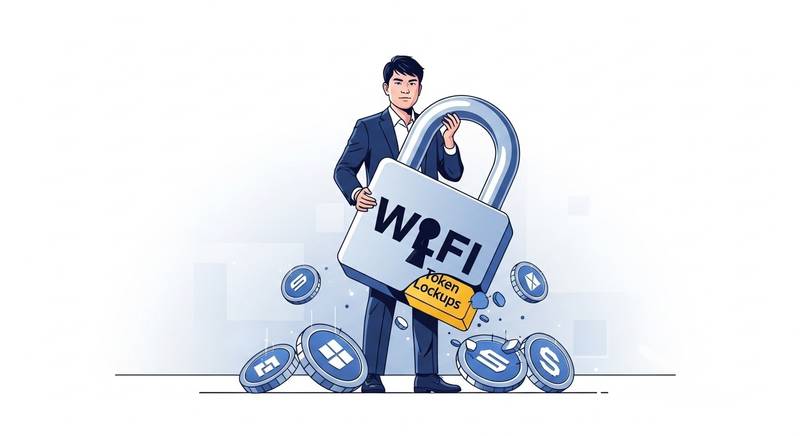
Justin Sun publicly attacked World Liberty Financial over WLFI token lockups and governance controls, arguing the project was shutting holders out of a fair process. WLFI answered by accusing Sun of making baseless allegations and threatening court action, turning a token-policy fight into a legal and reputational standoff.
Key Takeaways
- Cointelegraph’s April 12 report said Sun argued WLFI’s lockup and freeze-related votes were not fair or transparent.
- WLFI’s March 3 risk disclosures say only part of the token is transferable and further early-supporter unlocks are intended to face another community vote.
- WLFI’s April 12 X post ended with the line “See you in court.”
What Justin Sun Said About WLFI Token Lockups
WLFI’s March 3, 2026 risk disclosures state that only a portion of WLFI is transferable, while the remaining early-supporter unlocks are intended to face a second community vote. In plain language, that means some holders cannot freely move their tokens unless a later governance process approves broader unlocks.
According to Cointelegraph’s April 12, 2026 report, Sun said the votes used to justify WLFI freezes and lockups were opaque, unfair, and predetermined, and treated the community like a personal ATM. The report tied his criticism directly to the governance process WLFI used to defend those restrictions.
The governance target in the dispute was the Snapshot proposal titled “Proposal: WLFI Governance Staking System”, which a Snapshot-derived tally showed drew 1,786 votes and a 2,759,719,932.047916 total score. Those totals matter because they are the formal numbers behind the process Sun said was not fair or transparent.
A Snapshot-derived tally of the same proposal found the top 10 wallets controlled about 76.7159% of the proposal score. That concentration is central to Sun’s complaint because a governance vote with roughly three quarters of the score in a small set of wallets is easier for critics to portray as predetermined.
The same WLFI disclosures also reserve the right to block and freeze wallet addresses under suspected illegal activity or a legal order. In a dispute over lockups, that clause gives the project a documented compliance and control framework that goes beyond ordinary vesting language.
How WLFI Responded With a Legal Threat
On April 12, 2026, WLFI accused Sun of making baseless allegations and wrote, “We have the contracts. We have the evidence. We have the truth. See you in court.” That April 12 post escalated the clash from a governance fight into a public legal threat.
Does anyone still believe @justinsuntron ?
Justin’s favorite move is playing the victim while making baseless allegations to cover up his own misconduct.
Same playbook, different target. WLFI isn't the first.
We have the contracts. We have the evidence. We have the truth.
See…
— WLFI (@worldlibertyfi) April 12, 2026
WLFI had already laid out part of its defense on April 9, 2026, when it said it was one of the largest suppliers and borrowers on WLFI Markets, had supplied WLFI as collateral, and had borrowed stablecoins. That admission matters because it shows the token at the center of the lockup argument was also being used inside WLFI’s own lending structure, a setup that sits squarely inside the broader settlement and payments themes Coinwy recently covered in Europe’s Stablecoin Adoption Enters Execution as Firms Select Partners.
Sun’s criticism and WLFI’s answer therefore sit on two separate records: Cointelegraph’s summary of his objections and WLFI’s own posts and policy documents. That split keeps the present story centered on documented governance, transferability, and legal-threat language rather than on allegations outside the cited record.
Why the WLFI Token Lockup Clash Matters
WLFI’s March 3, 2026 disclosures say only part of the token is transferable, while future unlocks for early supporters are intended to return to community voting. Combined with the 76.7159% top-10 wallet share identified in a Snapshot-derived tally, that means the fight is not just about tone on X but about who can actually change the token’s rules.
That governance-control stack also raises a reputational question for holders: a token can be partially locked, subject to another vote, and still remain exposed to issuer freeze powers at the same time. For market participants already watching whether Bitcoin and Ether are near key levels that could signal trend reversal, a dispute like this adds project-specific governance risk on top of the wider market backdrop.
TRX, Sun’s flagship token, traded near $0.3226, with a $30.57 billion market cap, about $477.18 million in 24-hour volume, and a 0.87% daily gain during the dispute. That muted market reaction matters because it suggests the feud had not yet spilled into an obvious repricing of Sun’s broader TRON footprint.
The wider backdrop remained defensive, with the Fear & Greed Index at 16, or Extreme Fear. In a market already sensitive to delayed-supply and execution risks, the same cautious tone appears in Coinwy’s recent look at how Bitcoin miners face a tougher road to the 2028 halving.
What Comes Next
The next concrete test is whether WLFI’s documented rules change, stay in place, or move back through another community vote. Because the verified record includes the March 3 risk disclosures, the governance proposal, the April 9 collateral statement, and the April 12 legal-threat post, the balance of evidence still points to a control dispute first and a courtroom dispute second.
The balanced read from those records cuts both ways. WLFI can point to published policy language, while critics can point to concentrated voting power and freeze rights as reasons the lockup debate is unlikely to fade quickly.
For now, readers can verify the core facts in WLFI’s risk disclosures, the governance proposal page, and WLFI’s public response. Those documents define the narrow story better than rumor, and they are what make the lockup fight material to token holders.
Disclaimer: This article is for informational purposes only and does not constitute financial or investment advice. Cryptocurrency and digital asset markets carry significant risk. Always do your own research before making decisions.
Read also :
- Iran War Fallout Will Muddy Asset Markets Through 2026: Analyst
- Bitcoin Miners Face a Tougher Road to the 2028 Halving
- Europe’s Stablecoin Adoption Enters Execution as Firms Select Partners
- Bitcoin, Ether Near Key Levels That Could Signal Trend Reversal: Investor
- Trump-Linked Crypto Tokens Face Renewed Scrutiny After Price Plunge