

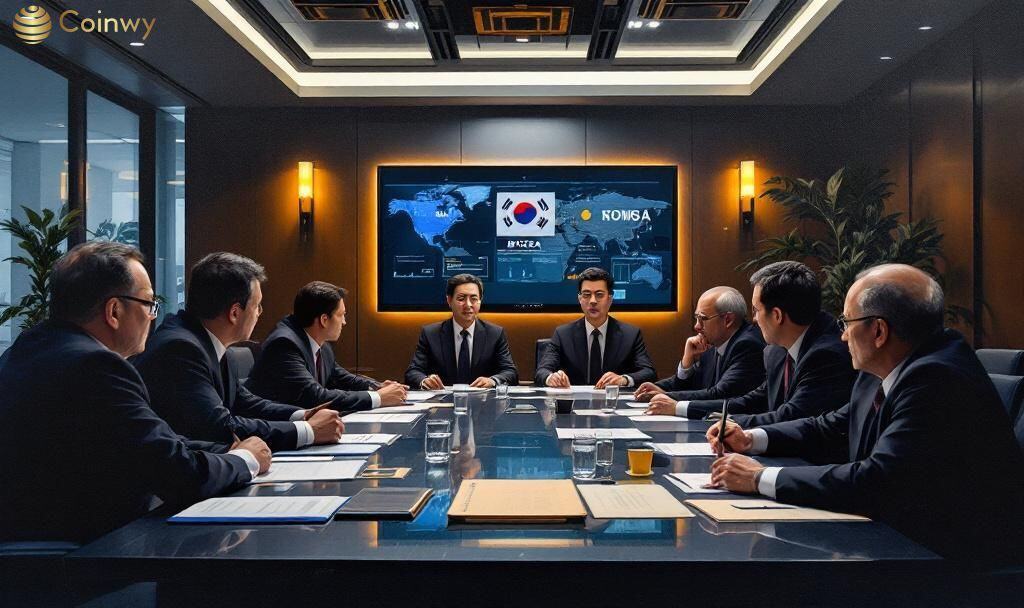
- South Korea mandates bank-level liability standards for crypto exchanges.
- Exchanges must compensate users for hacking losses.
- Regulations may lead to increased operational costs.
South Korea’s financial regulators plan to impose bank-level liability standards on crypto exchanges to enhance user protection against hacks and system failures.
This regulatory shift will increase operational costs for exchanges, potentially leading to market consolidation in South Korea’s crypto industry.
South Korea has taken significant steps to enforce bank-level liability on crypto exchanges, mandating that these platforms compensate users for losses stemming from hacks or system failures. This development is part of broader regulatory efforts under Korea’s electronic financial transaction law.
South Korea’s Financial Services Commission (FSC) and the Financial Supervisory Service (FSS) spearhead this initiative, aiming for parity between crypto exchanges and traditional banks. Stakeholders such as Upbit and Bithumb are subject to tighter scrutiny and potential sanctions under the new framework.
South Korea’s Regulatory Initiative
South Korea introduces bank-level liability standards for crypto exchanges, requiring them to compensate users for losses due to hacks or system failures. This move aligns with regulations under Korea’s electronic financial transaction law. Yoon Suk-yeol, President of South Korea, emphasized the need for strong protections, stating,
“We need to ensure that virtual asset service providers operate under stricter obligations to protect consumers, similar to the standards we uphold for financial institutions.”
The Financial Services Commission (FSC) and Financial Supervisory Service (FSS) lead this initiative, aiming at parity between crypto exchanges and banks. Exchanges like Upbit and Bithumb are now under stricter oversight and potential fines.
Financial Implications for Exchanges
Exchanges face heightened financial pressure, having to improve cybersecurity and possibly bear fines up to 3% of annual revenue. This change impacts major exchanges handling KRW-denominated volumes, like Upbit and Coinone.
Financial implications include the necessity for higher cybersecurity investments and insurance coverage. Smaller exchanges might exit or consolidate due to increased costs, favoring larger, capital-rich platforms.
Long-term Industry Impact
Increased regulatory pressure shapes long-term industry operations, with implications for exchange listing standards and user onboarding procedures. Embracing cold storage solutions could become a norm to mitigate risks.
Historical precedence of bank-like obligations, like Upbit’s $30.1M hack compensation, highlights the financial burdens exchanges might face. The framework could alter Korean crypto market dynamics significantly, influencing global regulatory approaches in the sector.
Read also :
- Texas power grid framework could lift bitcoin miners
- Hyperliquid Expansion Thesis Could Lift HYPE, Hyperion CEO Says
- Tether Discontinues aUSDT and Alloy Platform, Refocuses on Core Stablecoin Products
- Bybit Lists REUSDT Perpetual Contract With Up to 20x Leverage
- World Datacentre Summit Philippines 2026 Opens Sponsorship, Speaking, and Exhibition Opportunities