



Crypto hacks in 2026 have already surpassed $750 million in losses through mid-April alone, driven by an unprecedented wave of bridge exploits and state-sponsored operations that exposed fundamental weaknesses in cross-chain infrastructure.
The two largest incidents, the KelpDAO LayerZero bridge exploit ($292 million) and the Drift Protocol attack ($285 million), together account for over $577 million of the total. April 2026 became crypto’s worst month on record for hacks, with 30 separate incidents producing $620 to $625 million in losses.
The Biggest Crypto Hacks of 2026 So Far
On April 18, 2026, attackers drained approximately $292 million (116,500 rsETH) from KelpDAO’s LayerZero bridge in what became the single largest DeFi exploit of the year. Chainalysis attributed the attack to North Korea’s Lazarus Group, specifically its TraderTraitor sub-unit.
The attackers compromised KelpDAO’s internal RPC nodes while simultaneously DDoS-ing external nodes, exploiting a 1-of-1 Decentralized Verifier Network configuration that created a single point of failure. Every on-chain transaction appeared completely valid, meaning standard monitoring tools failed to flag the theft in progress.
Seventeen days earlier, on April 1, Drift Protocol suffered a $285 million exploit. North Korean state-sponsored group UNC4736 executed a months-long social engineering campaign, ultimately using Solana’s durable nonce mechanism to seize administrative control of the protocol’s multisig.
The year’s hack wave started in January, when PeckShield tracked 16 separate incidents totaling $86.01 million. Step Finance was the largest January target, losing $28.9 million (261,854 SOL) through a private key compromise.
According to PeckShield, the crypto industry recorded 16 hacks in January 2026 with total losses of $86.01 million, down 1.42% YoY but up 13.25% MoM, while phishing losses remained severe at over $300 million. The largest incidents included Step Finance ($28.9M), Truebit…
— Wu Blockchain (@WuBlockchain) February 1, 2026
Source: @WuBlockchain on X
In May 2026, the Verus-Ethereum bridge was exploited for $11.58 million using a verification bypass that cost the attacker just $10 to execute. Security researchers estimated the vulnerability could have been fixed in roughly 10 lines of code.
How Bridge Exploits Became 2026’s Dominant Attack Vector
PeckShield tracked eight bridge-related exploits through mid-May 2026, with cumulative losses of $328.6 million across cross-chain protocols. Bridge exploits accounted for approximately 47% of all April losses.
All-time, DeFiLlama data shows $16.5 billion in total crypto hack losses, with $3.2 billion attributed to bridge exploits alone.

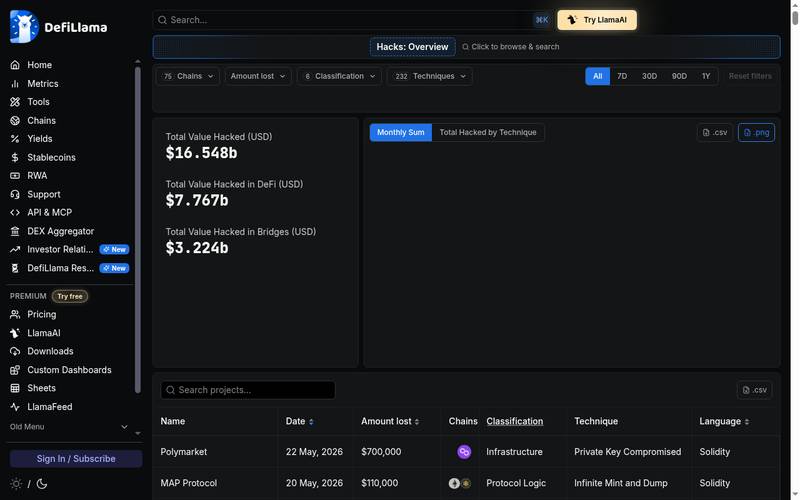
Bridges are structurally high-risk because they pool large amounts of liquidity and connect separate trust domains. A bridge must validate transactions across chains with different consensus mechanisms, creating verification gaps that attackers can target.
The KelpDAO case demonstrated a new class of attack. Rather than exploiting smart contract bugs, the Lazarus Group targeted off-chain infrastructure, compromising the nodes that feed data to on-chain verification systems. Chainalysis noted that “1-of-1 anything, validators, DVN, signers, RPC providers, should now be treated as an active, rather than theoretical, risk.”
The pattern extends beyond bridges. The Drift Protocol attack relied on social engineering rather than code exploits, and a second attempted theft of approximately $95 million from KelpDAO was blocked only because an emergency multisig pause was triggered 46 minutes after the initial drain began. These incidents echo earlier bridge disasters like the Ronin ($625 million, 2022) and Wormhole ($320 million, 2022) hacks, but with a tactical evolution: the 2026 attacks targeted human and infrastructure layers that standard smart contract audits cannot detect.
What the 2026 Hack Wave Means for DeFi Security and Users
Some recovery efforts have materialized. On April 20, 2026, the Arbitrum Security Council executed an emergency action freezing 30,766 ETH (approximately $71 million) of the KelpDAO attacker’s downstream funds, coordinating with law enforcement. The freeze represented roughly 24% of the total stolen amount.
The KelpDAO hack triggered immediate defensive responses across DeFi. Aave, SparkLend, and Fluid froze rsETH markets. AAVE’s token dropped approximately 10% in the aftermath. According to unconfirmed reports, $14 billion in total value locked left DeFi protocols within days of the incident.
The attribution of both the KelpDAO and Drift attacks to North Korean state-sponsored groups carries national security implications consistent with prior OFAC actions against Lazarus-linked addresses. No new regulatory designations specifically referencing 2026 exploits have been confirmed, though similar attribution patterns in 2022 led to Treasury sanctions on Tornado Cash. As policymakers debate strategic bitcoin reserve frameworks, the security of DeFi infrastructure remains a parallel concern.
The shift from smart contract vulnerabilities to infrastructure and human-layer attacks demands a rethinking of security practices. Code audits alone cannot prevent compromised RPC nodes, social engineering of multisig signers, or domain hijacking. The Verus case, where $10 in attacker cost yielded $11.58 million, illustrates the extreme asymmetry in bridge risk that persists even in protocols with basic security measures.
The Fear & Greed Index sits at 28 (Fear) as of May 23, 2026, reflecting broader market anxiety. For DeFi users, the practical takeaway is clear: protocols relying on single points of failure in their verification infrastructure, whether 1-of-1 validator setups or centralized RPC dependencies, remain exposed. As prediction markets face their own regulatory challenges and exchanges expand into new asset classes, the security gap in cross-chain infrastructure remains the industry’s most urgent unresolved problem.
Disclaimer: This article is for informational purposes only and does not constitute financial or investment advice. Cryptocurrency and digital asset markets carry significant risk. Always do your own research before making decisions.
Read also :
- Tether Suspends USDT Withdrawals on Tron Network: What You Need to Know
- SEC Approves Nasdaq to List Bitcoin Index Options
- OKX and ICE to Launch Perpetual Oil Futures for Crypto Traders
- Kalshi and Polymarket Lose Bid to Block State Gambling Cases
- Strategic Bitcoin Reserve Bill Drops 1M BTC Target, Adds 20-Year Lockup