


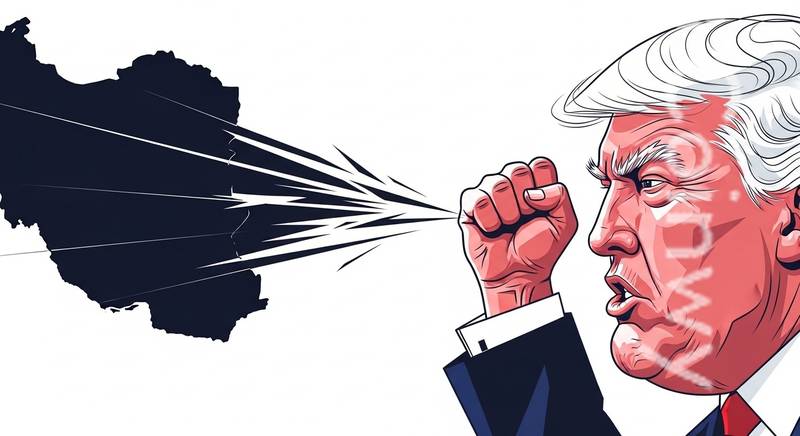
President Donald Trump said the United States could hit Iran “extremely hard” in the coming weeks, but the same White House message said talks were still underway, leaving markets to price both a diplomatic opening and a sharper escalation risk.
KEY TAKEAWAY
- The White House published the address as an official release tied to Operation Epic Fury.
- Trump said the U.S. could hit Iran extremely hard while negotiations were still active.
- AP reported an immediate market reaction, led by higher oil and weaker Asian equities.
What Trump said in the official address
In an April 2, 2026 White House release titled “President Trump Delivers Powerful Primetime Address on Operation Epic Fury,” the administration published the speech behind the headline.
The same official release quotes Trump saying, “We are going to hit them extremely hard over the next two to three weeks.”
That language matters because it came from an official presidential address rather than a secondhand summary. The White House text paired the threat with a note that talks were continuing.
The diplomatic window, and the named escalation risk
The White House release said negotiations were still active during the stated window. That creates a measurable de-escalation case, but it also sets a near-term deadline for whether diplomacy produces a deal.
An AP transcript of the address said Trump threatened to hit “each and every one” of Iran’s electric generating plants if no deal is reached. That made the warning more concrete than a broad pledge to respond militarily.
For markets, the split signal is the core point. The ongoing talks in the White House release support a calmer scenario, while the reference to electric generating plants in AP’s transcript gives investors a specific downside path to price.
Oil surged while Asian stocks fell
AP’s market follow-up said Trump told the public the United States would continue to hit Iran very hard, and reported that Brent crude rose 4.9% to $106.16 per barrel after the address. That is the clearest verified sign that traders treated the speech as an event with immediate energy-market implications.
Asian equities also turned lower in early trading, with the Nikkei 225 down 1.9% and the Kospi down 3.6%. Those moves fit a standard risk-off response, with oil rising as equity indexes weakened.
That reaction matters for Coinwy readers even without verified Bitcoin pricing in the current file. When Brent crude jumps 4.9%, macro stress can overshadow industry-specific narratives such as the Treasury’s request for comment on state-level stablecoin regulation.
The de-escalation case, and the escalation case
The constructive reading for risk assets is narrow but concrete. The White House release said talks were ongoing, and the research file does not contain independently verified crypto-market data showing a disorderly Bitcoin selloff tied directly to the speech.
The bearish reading rests on the verified market and infrastructure signals already on record. AP reported $106.16 Brent crude, and AP’s transcript described a threat to Iran’s electric generating plants, a combination consistent with higher geopolitical risk premiums.
Any Bitcoin-specific angle should therefore stay cautious. A single source reported a crypto framing around the address, but without an independently verified BTC price move, the better-supported takeaway is that macro stress, not confirmed token data, is the story at this stage.
The broader backdrop is that markets are already balancing several policy-sensitive narratives at once, from SpaceX’s reported IPO filing to EDX Markets’ push for an OCC trust bank. Trump’s Iran remarks add another macro variable that can reshape sentiment across crypto and traditional assets before any new military action is confirmed.
Disclaimer: This article is for informational purposes only and does not constitute financial or investment advice. Cryptocurrency and digital asset markets carry significant risk. Always do your own research before making decisions.