
The United Kingdom sanctioned Xinbi Guarantee on March 26, 2026, targeting one of the largest illicit cryptocurrency marketplaces ever identified. The UK’s Foreign, Commonwealth & Development Office imposed the sanctions to isolate the Chinese-language Telegram-based platform from legitimate crypto infrastructure, freezing all UK-connected assets and barring British businesses, banks, and crypto firms from transacting with it.
Blockchain analytics firm Chainalysis estimates that Xinbi processed more than $19.9 billion in illicit cryptocurrency flows between 2021 and 2025. Elliptic, another blockchain forensics firm, independently pegged inflows at $19.7 billion.
The sanctions also hit Legend Innovation Co., the operator of the #8 Park scam compound in Cambodia that reportedly housed up to 20,000 trafficked workers. Three individuals were designated as well: Eang Soklim, who operated #8 Park, along with Thet Li and Hu Xiaowei for their roles in related operations.
What Xinbi Is and Why the UK Moved Against It
Xinbi Guarantee operated as a Chinese-language escrow marketplace on Telegram, facilitating money laundering, the sale of stolen personal data, counterfeit documents, and even Starlink satellite equipment. The platform served as a financial backbone for fraudsters running pig butchering scams and other operations across Southeast Asian scam compounds.
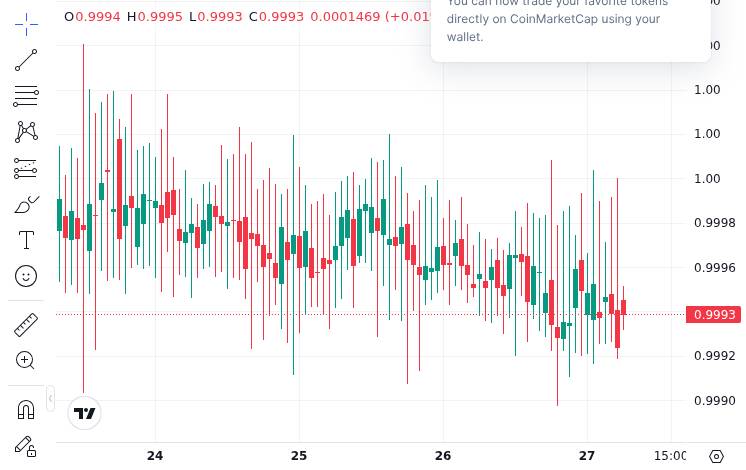
The platform built proprietary tools to scale its operations, including Xinbi Pay, a payments application, and SafeW, a messaging app. These tools helped Xinbi process billions in USDT (Tether), the dominant stablecoin used across illicit marketplaces in the region.
Perhaps most striking, portions of the $235 million WazirX exchange hack, attributed to North Korean actors, were traced to Xinbi merchant addresses. This connection elevates the platform from a regional fraud tool to a node in state-sponsored cybercrime networks.
The FCDO stated that the sanctions would “isolate the platform from the legitimate crypto ecosystem, significantly disrupting its operations.” Among the frozen UK assets: a £100 million City of London office block, multi-million-pound mansions, and a helicopter.
The enforcement action follows a pattern of coordinated Western pressure. In October 2025, the US and UK jointly sanctioned the Prince Group, a conglomerate linked to similar Southeast Asian scam operations. Prince Group chairman Chen Zhi was arrested in January 2026.
The enforcement-positive framing is clear: the UK is dismantling real criminal infrastructure, not targeting abstract protocol-level tools. But skeptics note that sanctioning a Telegram-based marketplace is technically difficult to enforce. Xinbi’s operations are peer-to-peer by design, and the platform may simply reconstitute under a different name.
How Sanctions Cut Xinbi Off From Legitimate Crypto Rails
UK financial sanctions translate into crypto enforcement through a compliance chain. Once OFSI designates an entity, every UK-regulated Virtual Asset Service Provider is legally obligated to screen for and block transactions involving sanctioned addresses.
Blockchain analytics firms like Chainalysis and Elliptic update their compliance screening tools to flag wallets associated with sanctioned entities. Regulated exchanges worldwide, not just in the UK, use these tools. Any Xinbi-linked address that touches a compliant exchange gets frozen.
This mechanism has precedent. When the US sanctioned Tornado Cash in 2022, exchanges globally froze associated funds within hours. The Garantex sanctions similarly demonstrated how designation can cut an entity off from fiat off-ramps even when the platform itself continues operating.
For the bull case, compliance screening creates a real wall. Xinbi’s operators and merchants lose access to every regulated fiat off-ramp, making it increasingly difficult to convert illicit crypto into spendable money. As broader regulatory enforcement tightens around Southeast Asian scam networks, the exits narrow further.
The bear case is equally real. Determined actors on Telegram can route around KYC-gated exchanges using peer-to-peer trades, chain-hopping techniques, or unregulated OTC desks. Sanctions may push activity deeper underground rather than eliminating it. The on-chain flows may simply migrate to a successor platform.
What This Signals for Crypto Regulation and Illicit Finance
The Xinbi sanctions mark the first time a nation has targeted a platform of this type under its Global Human Rights sanctions regime. That framing is deliberate, linking crypto enforcement to human trafficking and forced labor in Southeast Asian scam compounds rather than purely financial crime.
This action is not an isolated UK move. It fits within a broader Five Eyes enforcement trajectory where the US, UK, and allied governments are coordinating regulatory pressure on crypto-enabled fraud and money laundering. The FATF travel rule, which requires VASPs to share sender and receiver information on transactions above certain thresholds, makes these sanctions enforceable at the compliance layer.
For the legitimate crypto industry, the UK’s approach carries a dual signal. On one hand, targeted enforcement against clearly criminal platforms demonstrates that regulators can distinguish between illicit actors and the broader ecosystem. The FCDO itself noted that less than 1% of all crypto transactions are illicit, compared to 2-5% of global GDP laundered through traditional finance.
On the other hand, civil liberties advocates warn that the expanding reach of blockchain analytics and sanctions lists creates compliance risk for legitimate actors. A wallet that unknowingly receives funds with indirect Xinbi exposure could face screening flags. As governments build out these enforcement tools, questions around how crypto firms navigate regulatory obligations will only intensify.
Elliptic’s research timeline illustrates how blockchain forensics now drive enforcement. The firm published its #8 Park investigation on February 4, 2026. By February 9, evacuation orders circulated within the compound. On-chain data confirmed the compound had largely shut down by February 13, just nine days later. The sanctions announced March 26 formalized what on-chain intelligence had already set in motion.
The UK has positioned itself as building a credible crypto enforcement toolkit ahead of its full regulatory rollout under the Financial Services and Markets Act. Whether this approach effectively reduces illicit flows or simply displaces them into less visible channels will depend on how broadly international partners adopt compatible frameworks and whether Telegram-native platforms can truly be isolated from the global financial system.
Disclaimer: This article is for informational purposes only and does not constitute financial or investment advice. Cryptocurrency and digital asset markets carry significant risk. Always do your own research before making decisions.