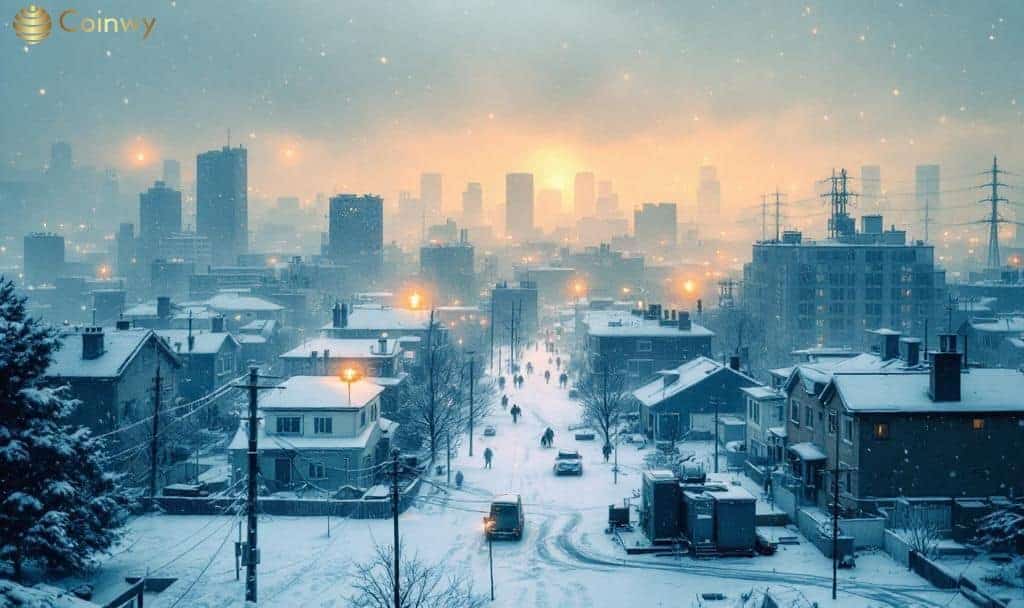
- US miners cut output during a severe winter storm.
- The network hashrate dropped to 663 EH/s.
- Residential power was prioritized by grid operators.
US Bitcoin miners, including major firms like CleanSpark and Marathon Digital, reduced output from January 25-28, 2026, during Winter Storm Fern due to grid strain, especially in Texas.
The temporary reduction in mining output highlights issues with grid resilience, showing the network’s ability to quickly respond and adapt without long-term impacts.
During Winter Storm Fern, major US Bitcoin miners reduced output, causing a notable dip in network hashrate to 663 EH/s. This voluntary action aimed to ease grid strain between January 25-28, 2026.
US Miners and Hashrate Impact
Companies such as CleanSpark, Riot Platforms, and Marathon Digital participated in demand-response programs, helping prioritize residential power. The hashrate decrease was a temporary measure without threatening Bitcoin’s overall security.
Grid Impact and Financial Benefits
The immediate effects included a slower network, with block times reaching approximately 12 minutes. Miners actively engaged in supporting grid stability by reducing power consumption during peak demand.
Financially, miners benefited from selling back power to the grid, resulting in up to 150% profit increases. Stocks like TeraWulf and Iris Energy reported gains following the event.
Recovery and Industry Resilience
Miners’ activity demonstrated resilience, with hashrate recovery following storm normalization. The action provided insights into the flexibility and responsiveness of the Bitcoin mining industry.
Future events may see similar curtailments, enhancing grid stability without lasting effects on Bitcoin. Bitcoin’s design accommodates volatility, exemplified by its effective difficulty adjustment mechanism.
“We saw our daily BTC production fall from approximately 22 to 12 during the storm, emphasizing the importance of our demand-response capabilities in supporting grid stability.” – Zachary Bradford, CEO, CleanSpark