






Leverage trading lets a trader control a crypto position larger than the collateral committed to it. A $1,000 margin deposit at 5x creates $5,000 of market exposure, so every 1% price move changes the position’s value by $50 before fees and funding.
The multiplier magnifies profit and loss equally; it does not improve the trade’s odds. Higher leverage mainly reduces the distance between the entry and the point where losses consume the available margin, making position size, maintenance margin and liquidation rules more important than the maximum number shown by an exchange.

What leverage trading means in crypto
Leverage is the ratio between total position exposure and the margin supporting that position. The relationship is straightforward:
Position exposure = margin x leverage
With $500 of margin, 2x leverage creates $1,000 of exposure, 5x creates $2,500, and 10x creates $5,000. Profit and loss are calculated from the exposure rather than from the smaller deposit, while the margin determines how much collateral is available to absorb that result.
Crypto traders normally obtain leverage through margin borrowing, dated futures, perpetual swaps or options. Perpetual contracts are especially common because they do not expire, but they add periodic funding payments and an automated liquidation process. Coinwy’s perpetual exchange overview explains how those contracts differ across centralized and onchain venues.
| Product | What creates leverage | Ongoing cost | What the trader owns | Main additional risk |
|---|---|---|---|---|
| Spot margin | Borrowed crypto or cash | Borrow interest | The purchased or borrowed spot asset | Loan recall, interest and collateral changes |
| Perpetual swap | Margin supports a larger derivative position | Funding plus trading fees | A contract tracking an index | Liquidation, funding and mark-price risk |
| Dated future | Margin supports a contract with expiry | Basis and trading fees | A contract settling on a set date | Expiry, roll and settlement risk |
| Option | Premium buys asymmetric exposure | Premium and time decay | A contractual right | Expiry, volatility pricing and complexity |
How a leveraged position changes profit and loss
Consider a trader who uses $1,000 of margin to open a $5,000 BTC perpetual position at 5x leverage. A 2% favorable move produces a $100 unrealized gain because 2% is applied to the $5,000 exposure. That is a 10% return on the deposited margin before fees. A 2% adverse move produces the same $100 change in the opposite direction.
| BTC move | PnL on $5,000 exposure | PnL as share of $1,000 margin | Margin before fees |
|---|---|---|---|
| +5% | +$250 | +25% | $1,250 |
| +2% | +$100 | +10% | $1,100 |
| -2% | -$100 | -10% | $900 |
| -5% | -$250 | -25% | $750 |
| -10% | -$500 | -50% | $500 |
Leverage itself does not change the dollar PnL of a fixed $5,000 position. The same market move produces the same gain or loss whether that exposure is supported by $5,000 at 1x or $1,000 at 5x. What changes is the fraction of collateral consumed by the result and the remaining distance to forced closure.
Initial margin, maintenance margin and liquidation
Initial margin is the collateral required to open a position. Maintenance margin is the minimum equity the position must retain after entry. Liquidation begins when position equity falls below the maintenance requirement, not simply when the original margin reaches zero.
| Field | What it controls | What changes it |
|---|---|---|
| Position notional | Total market exposure | Quantity and contract price |
| Initial margin | Capital committed at entry | Leverage, position tier and collateral rules |
| Maintenance margin | Minimum equity before liquidation | Position size, risk tier and venue policy |
| Mark price | Reference used by the risk engine | Index inputs, basis and venue calculation |
| Liquidation price | Estimated forced-close boundary | Entry, collateral, maintenance margin, fees and funding |
| Bankruptcy price | Point where allocated equity is exhausted | Position direction, entry and collateral |
The mark price matters because the last trade shown on a chart may not be the price used by the liquidation engine. A temporary difference between last price, index price and mark price can change displayed PnL without immediately triggering liquidation, or trigger a risk response before the last-traded chart reaches the same level.
Maintenance margin usually increases with position size because a larger exposure is harder to close without market impact. This is why the same leverage setting can produce a different liquidation estimate after quantity crosses a venue’s risk tier. The CME margin primer provides useful traditional-market context: margin is a performance bond supporting exposure, not a down payment that grants ownership of the underlying asset.
Why the simple liquidation formula is only an estimate
The shortcut 1 / leverage estimates the adverse move that would equal the initial margin if maintenance margin, fees and funding did not exist. It gives 20% at 5x, 10% at 10x, 5% at 20x and 2% at 50x. Real liquidation generally occurs sooner because the venue must preserve maintenance equity and pay for the closeout process.
| Leverage | Margin supporting $10,000 exposure | Loss from a 1% adverse move | Simplified adverse move equal to initial margin |
|---|---|---|---|
| 2x | $5,000 | $100 | 50% |
| 5x | $2,000 | $100 | 20% |
| 10x | $1,000 | $100 | 10% |
| 20x | $500 | $100 | 5% |
| 50x | $200 | $100 | 2% |
The final column is not a liquidation quote. A usable estimate must include the contract, direction, entry, maintenance tier, mark-price method, funding, closing fee and additional collateral. The displayed liquidation price matters only while those inputs remain current.
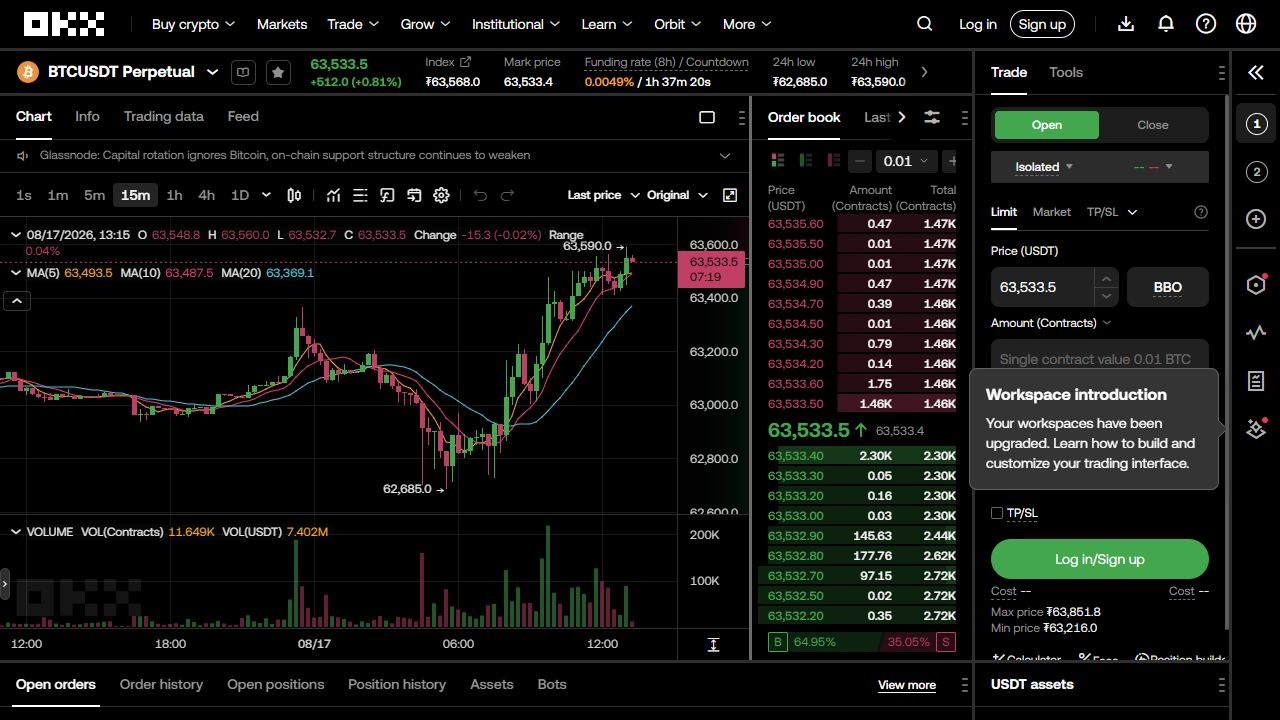
Liquidation can also execute below the trigger price during a fast move. Thin order books, chain congestion or a cascade of forced orders can create slippage between the risk engine’s decision and the final close. The live Coinglass liquidation dashboard illustrates how forced closures can cluster during volatile periods, although aggregate liquidations do not predict the outcome of an individual position.
Long, short and hedge positions use the same leverage math
A leveraged long gains when the contract price rises and loses when it falls. A leveraged short reverses that relationship. Both are exposed to liquidation, fees and funding; changing direction does not remove the need for a margin buffer.
Coinwy’s coverage of a Bybit perpetual listed with a 20x cap shows why a contract’s maximum multiplier must be separated from its liquidity, funding and position-size limits.
| Position | Example exposure | Favorable move | Adverse move | Typical purpose |
|---|---|---|---|---|
| 5x BTC long | $5,000 supported by $1,000 margin | BTC rises 4%, producing $200 before costs | BTC falls 4%, losing $200 before costs | Directional upside exposure |
| 5x BTC short | $5,000 supported by $1,000 margin | BTC falls 4%, producing $200 before costs | BTC rises 4%, losing $200 before costs | Directional downside exposure |
| Short hedge | Short notional matches part of a spot holding | Short offsets part of a spot drawdown | Short loses when spot appreciates | Temporary portfolio protection |
A hedge should be sized against the exposure being protected rather than against the largest available multiplier. If a trader owns $10,000 of spot BTC and wants to hedge half of that exposure, the target short notional is $5,000. The leverage setting determines how much margin supports the hedge; it does not determine the hedge ratio.
Isolated and cross margin create different loss boundaries
Isolated margin limits the position to collateral assigned to that trade, subject to the venue’s fees and liquidation process. Cross margin allows eligible account equity to support multiple positions. Cross can move one liquidation price farther away, but it does so by placing more account capital within reach of the loss.
| Margin mode | Capital supporting the trade | Main benefit | Main failure mode |
|---|---|---|---|
| Isolated | Collateral allocated to one position | Clearer position-level loss boundary | The individual position liquidates sooner if no margin is added |
| Cross | Shared eligible account equity | Gains and unused collateral can support a losing position | One loss can consume funds intended for other positions |
The appropriate choice depends on the strategy. Isolated margin makes a standalone trade easier to audit. Cross margin can support a deliberately hedged portfolio only when every position drawing from the same collateral pool is tracked. Coinwy’s perpetual DEX selection guide shows why wallet, protocol and account boundaries matter alongside the margin mode.
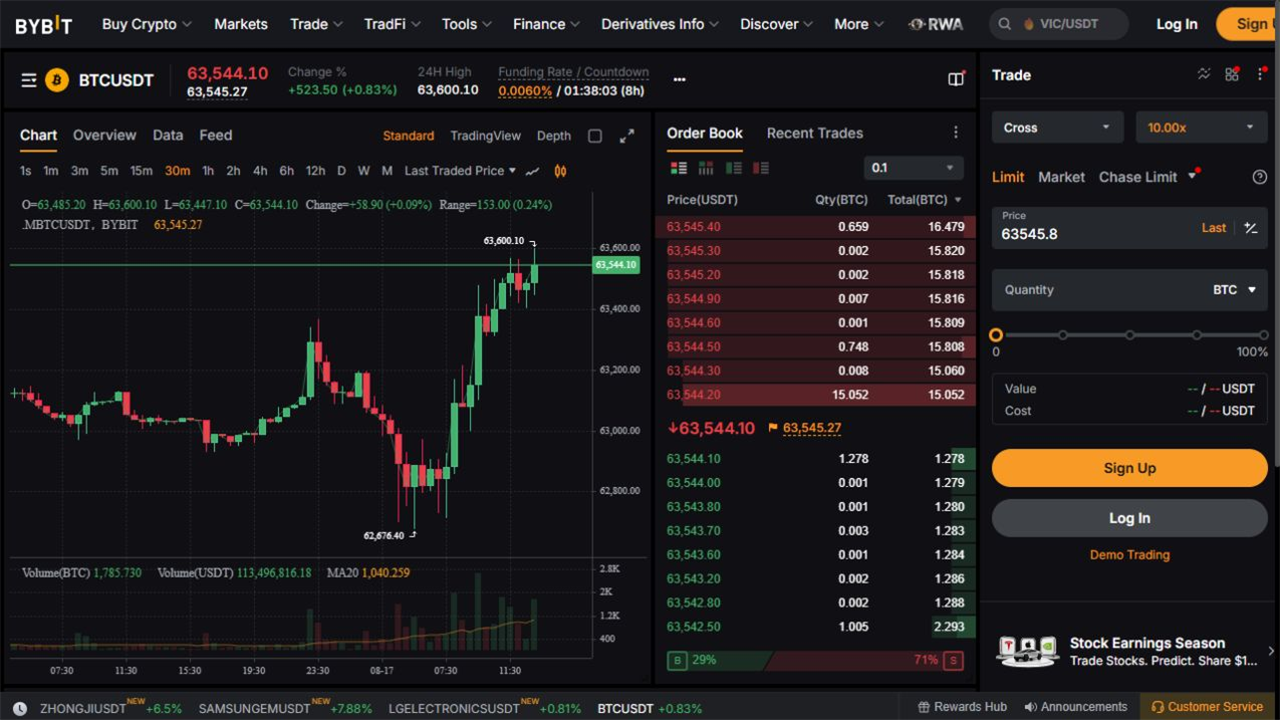
In an April 2026 discussion about learning cross and isolated margin, a Bybit user described losing money before understanding how the two modes allocate collateral. The account is a single experience, not evidence that one mode is universally safer, but it identifies the decision that must be explicit: exactly which balance can the liquidation engine consume.
Funding, fees and slippage reduce the usable buffer
Trading fees are charged on position notional, not on the smaller margin deposit. Funding is also calculated from notional and can be paid or received depending on contract pricing and market positioning. A highly leveraged position therefore experiences a larger fee and funding effect relative to its collateral.
For example, a 0.05% funding payment on $10,000 is $5. That amount consumes 0.5% of a $1,000 margin balance at 10x, but 2.5% of a $200 margin balance at 50x. Repeated funding intervals move the liquidation boundary even if market price remains unchanged. Coinwy’s report on a contract-level funding limit adjustment demonstrates why the rate, cap and settlement interval belong in the position calculation.
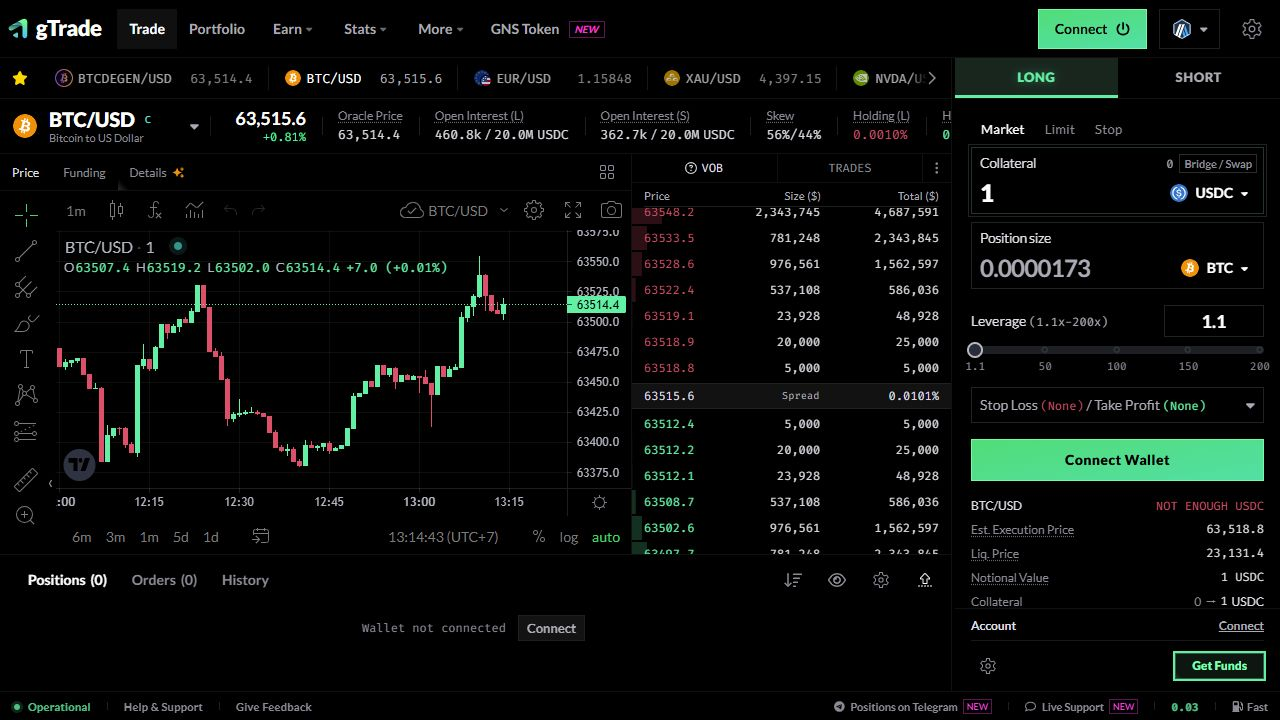
Spread and slippage are immediate execution costs. A stop order can reduce planned loss only if sufficient liquidity exists when triggered; it cannot guarantee the displayed stop price. On an onchain venue, network fees, oracle rules and transaction confirmation introduce additional variables. Coinwy’s coverage of an oracle-related perpetual DEX exploit shows how the reference-price path can become part of liquidation risk.
Position size should come before the leverage setting
A position can be sized from the maximum acceptable loss rather than from the multiplier offered by the exchange. The basic relationship is:
Position size = maximum planned loss / distance to stop
Suppose a trader’s plan allows a $100 loss and the invalidation point is 4% from entry. Ignoring slippage and fees, the resulting position is $2,500 because $100 divided by 4% equals $2,500. At 5x, that exposure needs approximately $500 of initial margin; at 10x, it needs approximately $250. The planned market loss remains $100 in both cases, but the 10x version has less collateral between the stop and liquidation.
Fees and slippage should be subtracted from the loss budget before finalizing size. If opening, closing and expected slippage total $12, only $88 remains for the directional price loss in the example. This makes the position smaller and prevents execution cost from silently pushing the realized loss above the plan.
What must be visible before a leveraged order is confirmed
The order ticket should identify the contract, position direction, notional, collateral, margin mode, leverage, mark price, estimated liquidation price, fee and funding interval. The positions panel should then show whether the order filled fully, partially or not at all. Missing one of these fields makes the risk boundary harder to reproduce.
The exit path deserves the same attention as entry. Reduce-only controls prevent a closing order from accidentally creating exposure in the opposite direction. A stop-market order prioritizes exit but accepts slippage, while a stop-limit order controls price but may remain unfilled. Neither order type eliminates liquidation risk during a gap, cascade or platform outage.
Conclusion
Leverage trading converts a margin deposit into larger market exposure, so profit, loss, fees and funding are all calculated from the larger position. The multiplier controls capital efficiency and the size of the remaining buffer; it does not improve the direction of the trade.
The durable workflow is to define position notional from a loss budget, choose isolated or cross margin deliberately, verify the mark and liquidation prices, include funding and execution costs, and keep liquidation farther away than the planned exit. A venue is usable only when those mechanics can be understood before capital is committed.
FAQs
What does 10x leverage mean in crypto?
It means the position exposure is ten times the posted margin. A $500 deposit can support a $5,000 position, and a 1% market move changes the position by $50 before costs, equal to 10% of the starting margin.
Can a trader lose more than the isolated margin?
The intended boundary is the collateral allocated to the isolated position, but execution slippage, platform rules and extreme market conditions can affect the final result. The venue’s contract and negative-balance policy determine the legal and operational outcome.
Does a stop-loss prevent liquidation?
No. A stop can trigger late, fill with slippage or remain unfilled if it is a stop-limit order. Position size and collateral buffer must remain sensible without assuming perfect stop execution.
Is cross margin safer than isolated margin?
Cross margin can delay liquidation by using more account equity, but that exposes additional collateral. Isolated margin creates a clearer position-level boundary; cross margin is appropriate only when shared collateral is intentional and continuously monitored.
Disclaimer: This article is for informational purposes only and does not constitute financial or investment advice. Cryptocurrency and digital asset markets carry significant risk. Always do your own research before making decisions.