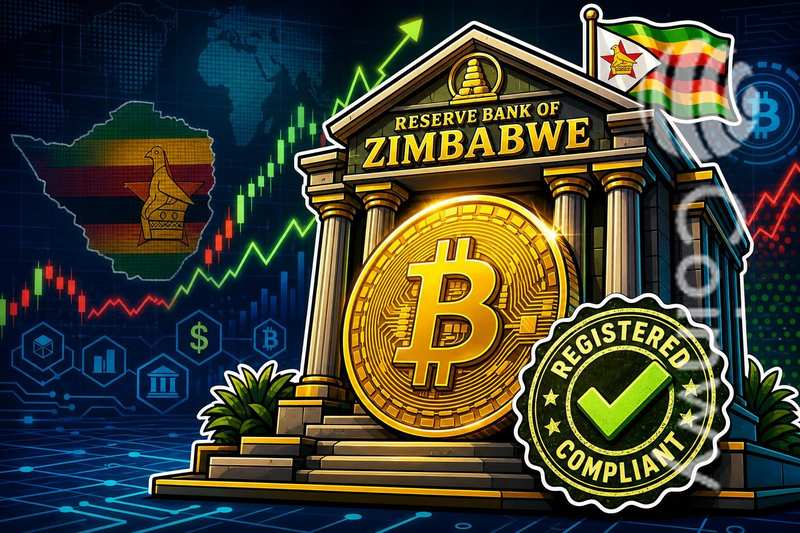
Zimbabwe is moving to regulate its crypto sector by requiring digital asset firms to register with the country’s central bank, marking a formal step toward oversight of an industry that has operated largely outside the nation’s regulatory framework.
Zimbabwe Signals a Formal Shift in Crypto Oversight
The regulatory move would place the Reserve Bank of Zimbabwe at the center of crypto oversight, establishing it as the primary authority responsible for monitoring and licensing firms that deal in virtual assets. Companies operating in the space would need to complete a registration process with the central bank before conducting business.
Key Takeaways
- Zimbabwe plans to require crypto firms to register with the Reserve Bank of Zimbabwe.
- The central bank would serve as the main regulatory body for digital asset businesses.
- The move shifts Zimbabwe’s crypto market from a loosely supervised space toward a formal compliance framework.
Zimbabwe’s central bank has previously addressed digital assets in its financial stability assessments. A Reserve Bank of Zimbabwe financial stability report acknowledged the growing presence of virtual assets and the risks they pose to the country’s financial system.
Legislative groundwork for tighter financial controls has also been visible through recent fiscal proposals. A Finance Bill tabled in Zimbabwe’s parliament signaled the government’s broader intent to update financial regulations, a process that now appears to extend to digital assets.
What Central Bank Registration Could Mean for Crypto Firms
Mandatory registration would affect a range of businesses, including exchanges, custodial wallet providers, and any entity facilitating the buying, selling, or transfer of virtual assets within Zimbabwe. These firms would likely face new compliance obligations around record-keeping, reporting, and customer verification.
For companies already active in Zimbabwe’s crypto market, the shift introduces a higher compliance threshold. Firms accustomed to operating without formal licensing will need to assess whether their current operations meet the standards a central bank registration process would demand.
The registration requirement also raises questions about how international crypto platforms serving Zimbabwean users would be treated. As countries formalize their regulatory approach, firms offering tokenized securities and other digital asset products globally may need to consider local licensing obligations in each jurisdiction they serve.
Broader developments in digital asset regulation, including efforts to integrate stablecoins into mainstream financial activity, suggest that countries without clear frameworks risk falling behind as the industry matures.
Why Zimbabwe’s Crypto Policy Move Matters
Central bank involvement signals that Zimbabwe views digital asset activity as significant enough to warrant institutional oversight rather than informal guidance. This positions Zimbabwe alongside a growing number of African nations working to bring crypto markets under formal regulation.
For market participants, regulation can serve as a double-edged development. Formal oversight may boost confidence among institutional and retail participants who have been cautious about entering an unregulated space. At the same time, compliance costs and operational restrictions could push smaller firms out of the market.
The announcement comes at a time when global crypto markets are navigating a complex regulatory landscape, with shifting price dynamics and evolving policy frameworks creating uncertainty for businesses and investors alike. Zimbabwe’s decision to act through its central bank, rather than a standalone regulator, suggests the country intends to integrate crypto oversight into its existing financial supervision architecture.
Firms operating in Zimbabwe should watch for the publication of specific statutory instruments that would define registration requirements, timelines, and penalties for non-compliance.
Disclaimer: This article is for informational purposes only and does not constitute financial or investment advice. Cryptocurrency and digital asset markets carry significant risk. Always do your own research before making decisions.
Read also :
- Bitcoin Could Crash to $48,000 if This Historical Pattern Returns
- Binance Launches bStocks Tokenized Securities With 1:1 Backing and 24/7 Trading
- World Liberty Financial to Fund UFC Bonuses in USD1 at White House Event
- Hodlers Digest June 7-13: OpenAI IPO, SEC, Hungary
- Bitcoin Nears $65K After Trump Says Hormuz Will ‘Open to All’