

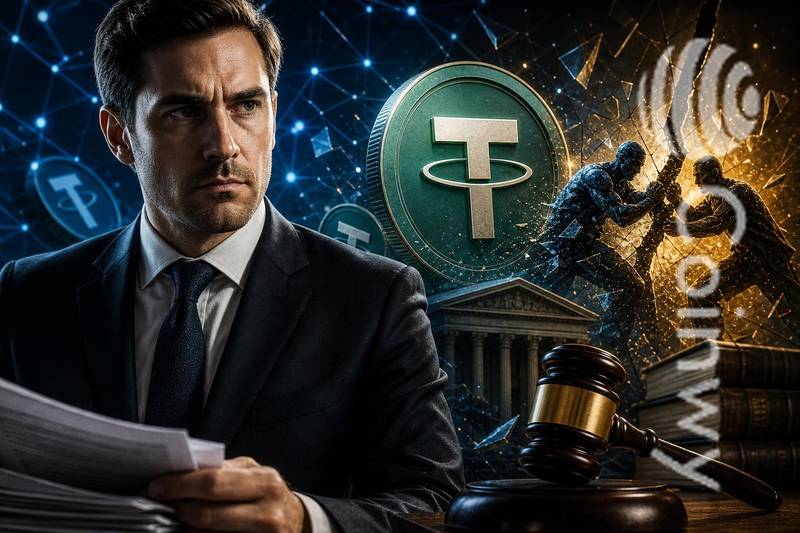
A lawyer connected to a high-profile Arbitrum seizure dispute has turned attention to Tether, the issuer of the world’s largest stablecoin, in a legal fight involving $344 million in frozen USDT. The case highlights growing legal pressure on stablecoin issuers and their role in law enforcement actions across crypto markets.
What the $344 Million Tether Dispute Involves
The dispute centers on Tether’s decision to freeze more than $344 million in USDT in coordination with the U.S. Office of Foreign Assets Control and federal law enforcement. The freeze targeted addresses linked to sanctioned entities, marking one of the largest stablecoin enforcement actions to date.
Legal filings tied to the case involve the law firm Gerstein & Harrow, which submitted a claim on behalf of Han Kim challenging the seizure. The claim raises questions about due process and the rights of wallet holders whose assets were frozen without prior court adjudication.
The case has drawn attention because of Tether’s central position in crypto trading infrastructure. USDT serves as the dominant trading pair across most major exchanges, meaning legal actions involving Tether’s ability to freeze tokens carry implications well beyond a single lawsuit. Recent instances of OFAC-linked crypto address sanctions have underscored how quickly stablecoin issuers can act on government directives.
The Arbitrum Seizure Fight and Why It Matters Here
The same legal team previously engaged in a dispute over frozen assets on Arbitrum, Ethereum’s largest Layer 2 network. That case involved a constitutional governance proposal within the Arbitrum DAO to approve the release of frozen ETH, sparking debate over whether decentralized protocols should comply with off-chain legal demands.
The Arbitrum fight established the lawyer’s willingness to challenge asset freezes in crypto-native governance forums, not just traditional courts. That strategy is now being applied to Tether, a centralized issuer with direct control over token freezing mechanics.
The shift from a DAO governance dispute to a direct challenge against a stablecoin issuer represents an escalation. Arbitrum’s frozen ETH case tested whether decentralized governance could resist seizure orders. The Tether dispute tests something different: whether a centralized company can freeze hundreds of millions in user assets at government request without adequate legal process for affected holders.
Legal Risk for Stablecoins Under Scrutiny
Large-scale stablecoin freezes have become a growing point of tension in crypto markets. Tether has cooperated with law enforcement on multiple occasions, positioning itself as a compliance-forward issuer. But each freeze also demonstrates the centralized control that Tether maintains over USDT balances, a reality that critics argue contradicts the decentralization ethos of crypto.
For traders and institutions holding significant USDT positions, the dispute raises practical counterparty risk questions. If assets can be frozen based on government coordination without prior judicial review, holders face exposure that differs meaningfully from traditional banking seizures, which typically require court orders. Similar legal pressures have prompted broader conversations about how restructuring across crypto firms reflects the industry’s ongoing adjustment to regulatory realities.
The outcome could set a precedent for how stablecoin freezes are legally challenged. If the Han Kim claim succeeds in establishing that Tether’s freeze process lacks sufficient due process protections, it could force changes to how stablecoin issuers handle government-directed asset seizures going forward.
Observers watching the intersection of cross-chain infrastructure and legal compliance note that the case also tests jurisdictional boundaries. Stablecoins operate across multiple blockchains simultaneously, complicating questions about which courts and regulators have authority over frozen assets.
The next steps in the case will depend on whether U.S. courts accept the legal challenge to the freeze mechanism itself. A ruling could arrive later this year, with potential ripple effects for institutional crypto allocations that increasingly include stablecoin exposure as a core portfolio component.
Disclaimer: This article is for informational purposes only and does not constitute financial or investment advice. Cryptocurrency and digital asset markets carry significant risk. Always do your own research before making decisions.
Read also :
- The Feed Is Becoming Crypto’s New Trading Terminal
- Polymarket Front-End Hack Drains $3.1M From 11 Wallets | Coinwy
- Bybit to Change Tick Size for USDT Perpetual Contracts on June 30, 2026
- Binance Word of the Day ‘AI Stock Trading’ Quiz Offers BNB Rewards
- SecondFi Recovery Plan Follows $2.4 Million Cardano Wallet Breach