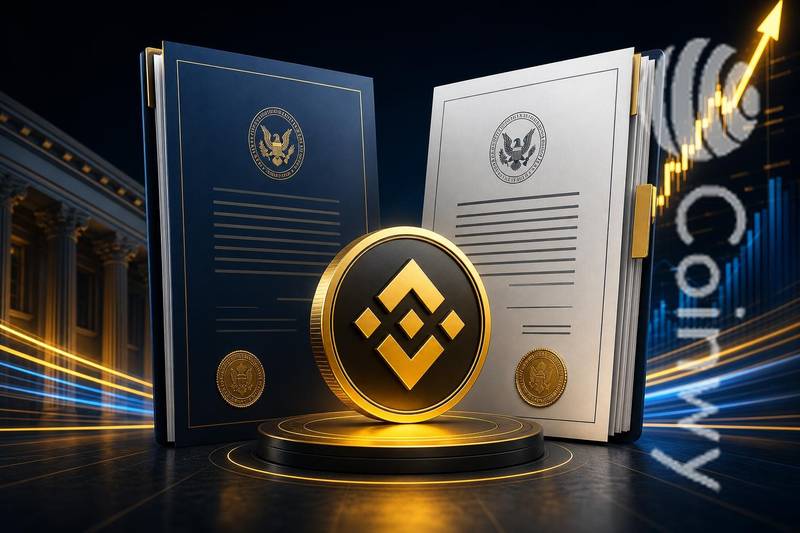
VanEck and Grayscale both filed amended S-1/A registration statements for their proposed BNB exchange-traded funds with the U.S. Securities and Exchange Commission on May 15, 2026, signaling that the two asset managers are actively refining their applications during ongoing regulatory review.
The VanEck BNB ETF amendment was accepted at 17:28:45 UTC under accession number 0001628280-26-035722 and is tied to File No. 333-286959. VanEck originally filed its S-1 registration statement on May 5, 2025, making this the latest in a series of amendments over a roughly one-year span.
The Grayscale BNB ETF amendment was accepted slightly earlier the same day, at 17:14:28 UTC, under accession number 0001193125-26-227224 and File No. 333-292896. Grayscale’s original S-1 was filed more recently, on January 23, 2026, meaning it entered the process about eight months after VanEck.
What the amended filings change
An S-1/A is an amendment to an initial registration statement. Issuers typically file amendments to address SEC staff comments, update financial disclosures, refine fund structure details, or incorporate new regulatory guidance. The fact that both firms filed on the same day suggests coordinated responsiveness to a common review cycle or deadline.
For VanEck, the amendment comes roughly a year after its original filing, indicating a sustained back-and-forth with regulators. Grayscale’s timeline is compressed by comparison; its original S-1 is less than four months old. Neither amendment guarantees that the SEC will declare the registration statements effective or that the funds will launch.
BNB traded at $656.87 at research fetch time, down 2.43% over 24 hours, with a market capitalization of roughly $88.5 billion and 24-hour trading volume near $865 million.
Why a BNB ETF stands apart from Bitcoin and Ethereum products
Unlike Bitcoin and Ethereum, which already have spot ETFs trading in U.S. markets, BNB is directly tied to the Binance ecosystem. A regulated ETF wrapper would give traditional investors exposure to BNB without requiring them to hold tokens on a centralized exchange or interact with BNB Chain directly.
That ecosystem is substantial. BNB Chain currently holds approximately $7.60 billion in total value locked, placing it among the larger smart-contract networks by DeFi activity.
The regulatory path for a BNB-based product is more complex than it was for Bitcoin ETFs. BNB’s close association with Binance, which has faced its own regulatory scrutiny, raises questions about issuer disclosures and custody arrangements that amendments may need to address. Institutional interest in crypto ETF products has been shifting in recent months, with some large allocators adjusting positions across both Bitcoin and Ether funds.
The broader market mood at the time of filing leaned cautious. The Fear & Greed Index registered 31, classified as “Fear,” suggesting that the amendments landed during a period of subdued risk appetite rather than speculative euphoria.
What to watch in the regulatory timeline
After an S-1/A amendment, the SEC staff typically reviews the updated disclosures and may issue additional comment letters or request further revisions. There is no fixed statutory clock on S-1 review the way there is for 19b-4 exchange rule-change proposals, so the timeline depends on how quickly staff concerns are resolved.
Market participants will be watching for several signals: whether the SEC issues new comment letters on either filing, whether additional S-1/A amendments follow in the coming weeks, and whether either issuer files a concurrent 19b-4 application to list shares on an exchange. The listing application is a separate regulatory track that must also be approved before trading can begin.
The competitive dynamic between VanEck and Grayscale adds urgency. VanEck’s year-long head start in the filing process does not necessarily translate to an earlier launch, since the SEC evaluates each application on its own merits. Grayscale, which has navigated complex regulatory processes before with its Bitcoin and Ethereum products, may benefit from institutional familiarity with its fund structures.
Recent sharp moves in Bitcoin have shown how quickly sentiment can shift in crypto markets, and any progress on the BNB ETF front could similarly trigger rapid repositioning. Meanwhile, the evolving tone of industry events underscores how much the crypto sector is working to professionalize as it courts mainstream financial products like ETFs.
For now, both applications remain in active review. The next concrete milestone to monitor is whether either firm’s amended registration statement is declared effective, or whether further rounds of amendments signal that additional hurdles remain.
Disclaimer: This article is for informational purposes only and does not constitute financial or investment advice. Cryptocurrency and digital asset markets carry significant risk. Always do your own research before making decisions.
Read also :
- Harvard Exits Ether ETF as Abu Dhabi Fund Adds to Bitcoin Holdings
- Bitcoin Analysis Sees Bear Trap as BTC Drops Below $78K Two-Week Low
- Sponsor Reviews Crypto Conference Partnership After Pole-Dancing Party
- Strategy Bitcoin Sale Plan Sparks Price Crash Panic
- Spot Bitcoin ETFs See $1 Billion Weekly Outflows as Inflow Streak Ends