



Binance is the strongest major-pair starting point, OKX is the better advanced-account comparison, and Bybit is the practical active-trading alternative. Kraken, Coinbase, BitMEX and Gate matter when security, access, product scope or contract breadth changes the decision.
The best CEX is the one that can execute your intended size, contain the loss and return collateral under your jurisdiction. Fees matter, but custody, margin mode, withdrawal rules and liquidation controls matter just as much.
Related guides: Hyperliquid vs dYdX in 2026: Liquidity, Fees and Decentralization, Best Perpetual Crypto Exchanges in 2026: CEX and DEX Compared, and 8 Best BitMEX and BitMart Alternatives in 2026: Safer, Better-Regulated Exchanges Compared
Quick comparison of the eight centralized exchanges
| Venue | Best fit | Strongest comparison angle | Main limitation | First test |
|---|---|---|---|---|
| Binance | Large BTC and ETH or professional-size orders | Market breadth and major-pair liquidity | Regional product restrictions and account eligibility | Confirm spot, futures, margin and withdrawal access |
| OKX | Advanced account users | Unified account and portfolio-style risk controls | More complex settings and margin interpretation | Test account mode, collateral treatment and account permissions |
| Bybit | Active spot and derivatives trader | Fast market discovery and trading-focused UX | Custody, jurisdiction and promotional-interface risk | Compare spot and derivatives fees before funding |
| Kraken | Security-first CEX user | Account security, custody and spot access | Product availability and market coverage vary by location | Confirm spot, fiat and derivatives eligibility |
| Bitget | Retail user comparing spot, perps and strategy products | Accessible trading and copy-trading workflows | Strategy presentation can obscure drawdown risk | Test manual trading before considering strategy products |
| Coinbase | Compliance-first trader comparing a regulated access route | Jurisdiction, custody and institutional onboarding | Availability and product coverage vary by region | Confirm eligible products, collateral and withdrawal path |
| BitMEX | Derivatives-native trader valuing a long operating history | Perpetual product design and risk controls | Not a broad all-purpose exchange for every user | Verify current markets, fees and account restrictions |
| Gate | Trader prioritizing broad asset and contract discovery | Listing breadth and market-specific liquidity | Depth and jurisdiction can vary sharply by asset | Test the exact asset, pair, spread and withdrawal workflow |
Readers who need the wider derivatives shortlist can continue to the best perpetual crypto exchanges guide. Readers comparing custody with self-custody venues should also read the CEX versus perp DEX comparison rather than treating centralized access as automatically safer.
Top Perpetual Decentralized Exchanges in 2026
Binance: major-pair depth, product breadth, and regional access
Binance is the natural first comparison for users who need broad asset coverage, major-pair liquidity, spot trading and an established centralized account workflow. The public Binance markets page exposes spot assets, market categories and routes into the trading interface. A complete review must also check the conversion route, deposit networks, withdrawal rules, account security and the products available in the user’s region.
The advantage is scale at the major-pair level. A user buying BTC or ETH spot may prefer the venue with the deepest usable book and the cleanest withdrawal route, while a derivatives trader may value the same venue for contract depth. In both cases, compare the exact notional, spread and settlement path rather than the most visible total volume. The limitation is eligibility: KYC requirements, fiat access, leverage and product availability can vary by country and account type.
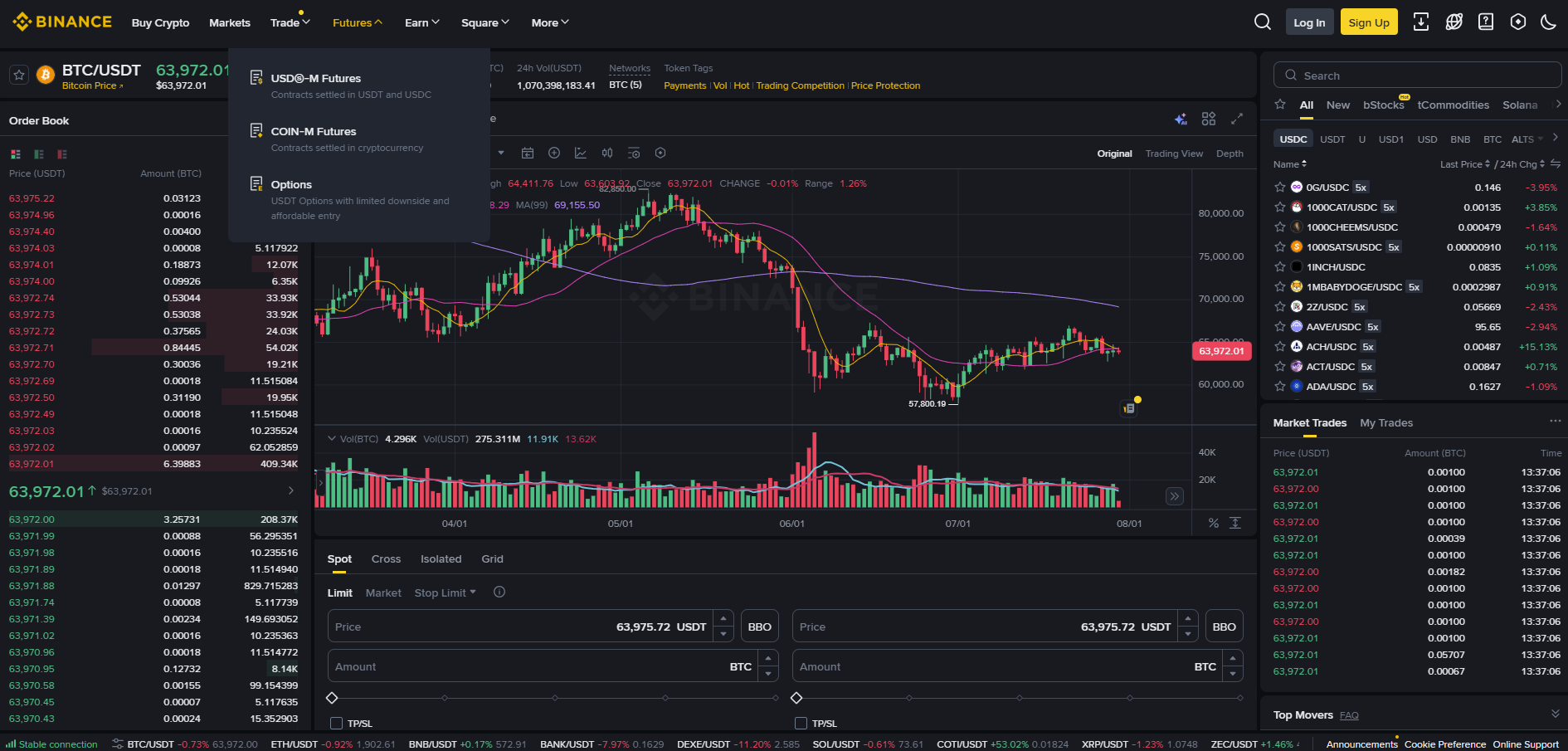
For fees, compare the actual maker/taker tier, spot conversion spread, perpetual funding only when relevant, and the withdrawal charge for the network the user will use. Margin matters only for leveraged products, so separate ordinary spot balances from isolated or cross-margin collateral and confirm how liquidation is displayed before enabling it. Custody remains centralized: account access, withdrawal approval, address controls and platform solvency sit between the user and the assets.
The first live test should match the user’s route. For spot, place a small limit order, compare the quoted and executed price, sell or transfer the asset, and withdraw the remaining balance. If derivatives are part of the plan, add an isolated low-notional position, a reduce-only close and a funding check. Do not treat a futures screenshot or a displayed market list as proof that the user’s intended spot route, withdrawal network or regional product is available.
Pros
- Deep BTC and ETH order books support larger notional tests.
- Broad perpetual coverage supports major-pair and altcoin comparisons.
- Established margin and order-entry workflows are easy to reproduce.
- Multiple fee tiers can reward genuinely active traders.
Cons
- Futures eligibility varies by country and account profile.
- Competitive fee tiers may require volume many users will not reach.
- Exchange custody makes withdrawals and risk controls counterparty dependencies.
- Broad contract choice can encourage unnecessary leverage.
OKX: advanced account structure across spot, margin and derivatives
OKX is a stronger fit when the trader wants a broader account structure instead of a basic buy-and-sell interface. The public OKX markets page provides a starting point for reviewing spot pairs, derivatives categories and the exchange’s account entry path. The important diligence question is how spot balances, futures, perpetuals, options, collateral, fees and margin mode interact inside the chosen account configuration.
That flexibility can help a trader running hedged positions, but it also increases the cost of misunderstanding the risk engine. Portfolio-style margin can make capital use more efficient while exposing the account to cross-position correlations and collateral shocks. A beginner should not enable an advanced mode merely because it promises better capital efficiency. Test isolated margin first, then document the exact collateral and liquidation behavior before moving to a more complex account.
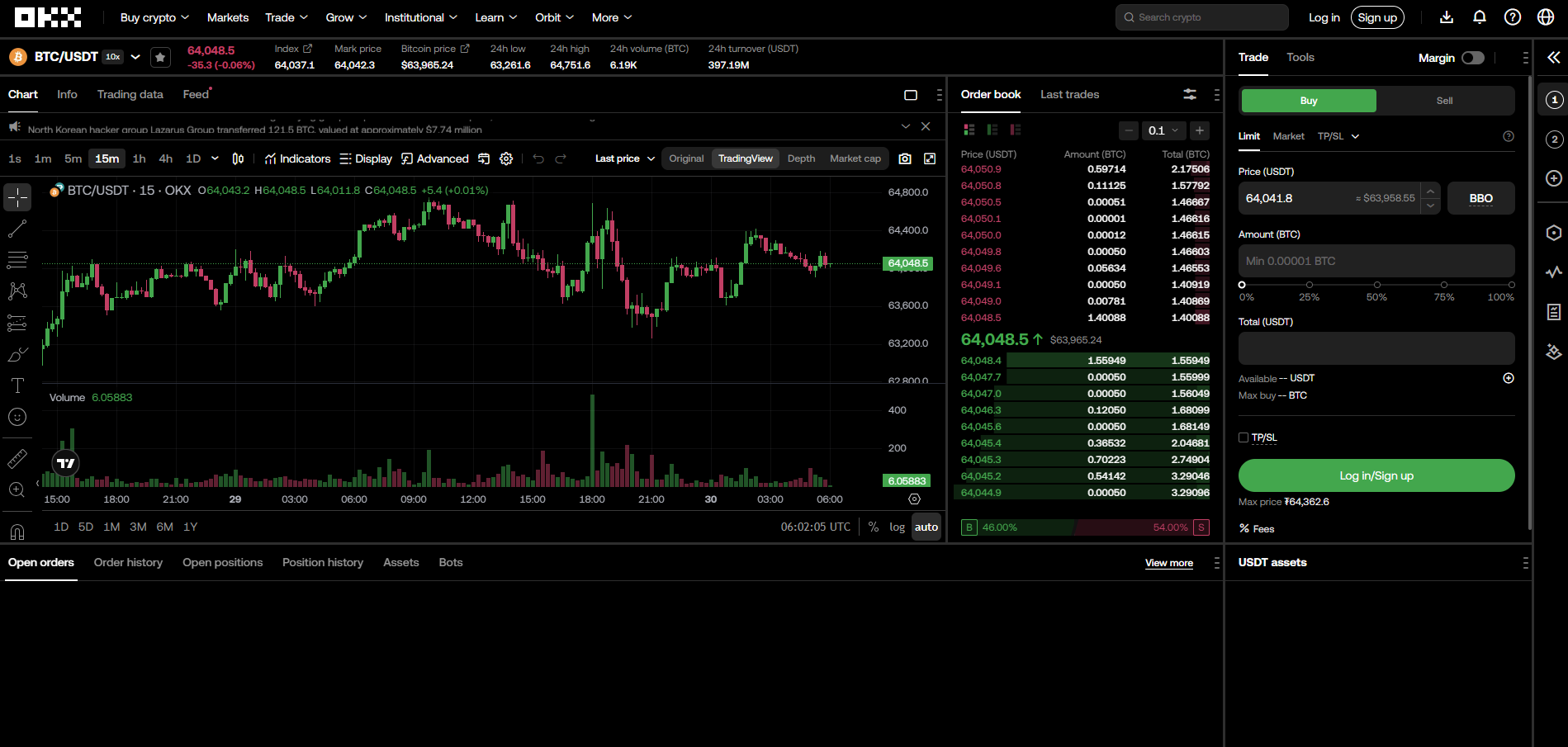
OKX fees need to be compared across spot, derivatives and the selected account tier rather than copied from one headline rate. Margin is the central product question because unified or portfolio-style modes can make one balance support several exposures. Custody is still exchange-based, so the review must include withdrawal permissions, account recovery and how collateral is separated or reused across products.
Advanced account users should separately test margin mode, collateral treatment, order acknowledgements, reduce-only closing, withdrawal limits and account recovery. This article treats those controls as part of venue selection rather than as a feature checklist.
Pros
- Unified accounts can coordinate spot, margin and derivatives collateral.
- Advanced margin modes suit hedged or multi-position workflows.
- Broad markets support major-pair and derivatives comparisons.
- Subaccounts can separate strategies and operating roles.
Cons
- Account modes make collateral exposure harder for beginners to understand.
- Portfolio-style efficiency can hide correlation and cross-position loss.
- Regional derivatives availability is not universal.
- A broad product menu adds operational distraction.
Bybit: active markets, altcoin access, and execution friction
Bybit is designed around active traders, with derivatives, spot markets and strategy products prominent in the account experience. Its public Bybit platform makes market discovery and derivatives entry easy to inspect. That can be useful for traders who compare altcoin markets, but it can also encourage unnecessary activity when promotions, copy-trading pages, or high-leverage choices take attention away from the loss boundary.
The useful test is not how many markets appear in the menu. Compare the liquidity of the specific contract, the spread at the intended notional, the funding rate, the liquidation buffer, and the ability to close during a fast move. For altcoin trading, the altcoin perpetual exchange guide should be read alongside this section because a long market list does not guarantee usable depth.
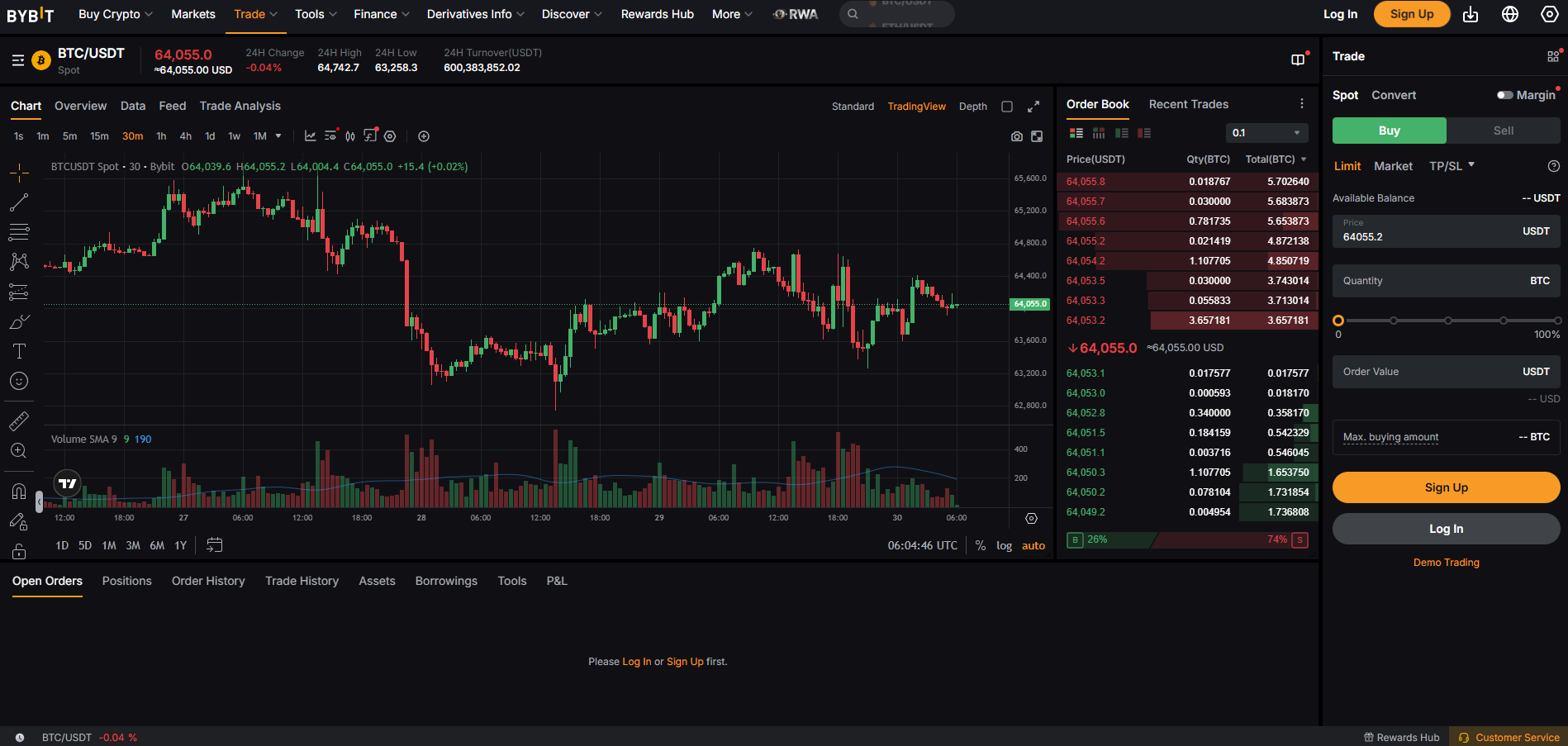
Keep active trading collateral separate from long-term holdings. A centralized exchange can be convenient for execution, but the convenience does not change the fact that account access, withdrawal processing, and internal risk controls remain outside the user’s direct custody.
Bybit should be compared on the complete cost of a spot or perpetual trade: maker/taker fees, spread, funding, conversion and withdrawal charges. Margin settings need to be checked separately because leverage promotions can make the maximum look more important than the liquidation boundary. Custody remains with the exchange, so account security, withdrawal restrictions and regional access are part of the decision rather than secondary details.
Pros
- Derivatives-focused navigation makes perps easy to find and test.
- Broad altcoin coverage helps when the exact contract is the priority.
- Active markets support funding, spread and contract comparisons.
- Limit, market and reduce-only workflows are easy to test.
Cons
- Promotions can make leverage look more attractive than it is.
- Altcoin breadth does not ensure executable depth or stable funding.
- Centralized custody leaves withdrawals and account access as risks.
- Regional product availability can change by user location.
Kraken: security posture, spot access, and product limits
Kraken belongs in this comparison for users who prioritize account security, custody posture, spot access and a conservative exchange relationship over the widest derivatives menu. Its public security page is useful for reviewing account-protection language, but it should not be treated as a complete operational audit. A practical review should test the user’s spot markets, deposit route, withdrawal process and, where relevant, derivatives eligibility in that region.
The main limitation is availability. A venue can have a credible security posture and still be unsuitable if the required perpetual product is not offered to the user’s account or jurisdiction. Confirm the exact product, collateral, settlement terms, and support path before comparing its fee with a venue that offers a different contract structure.
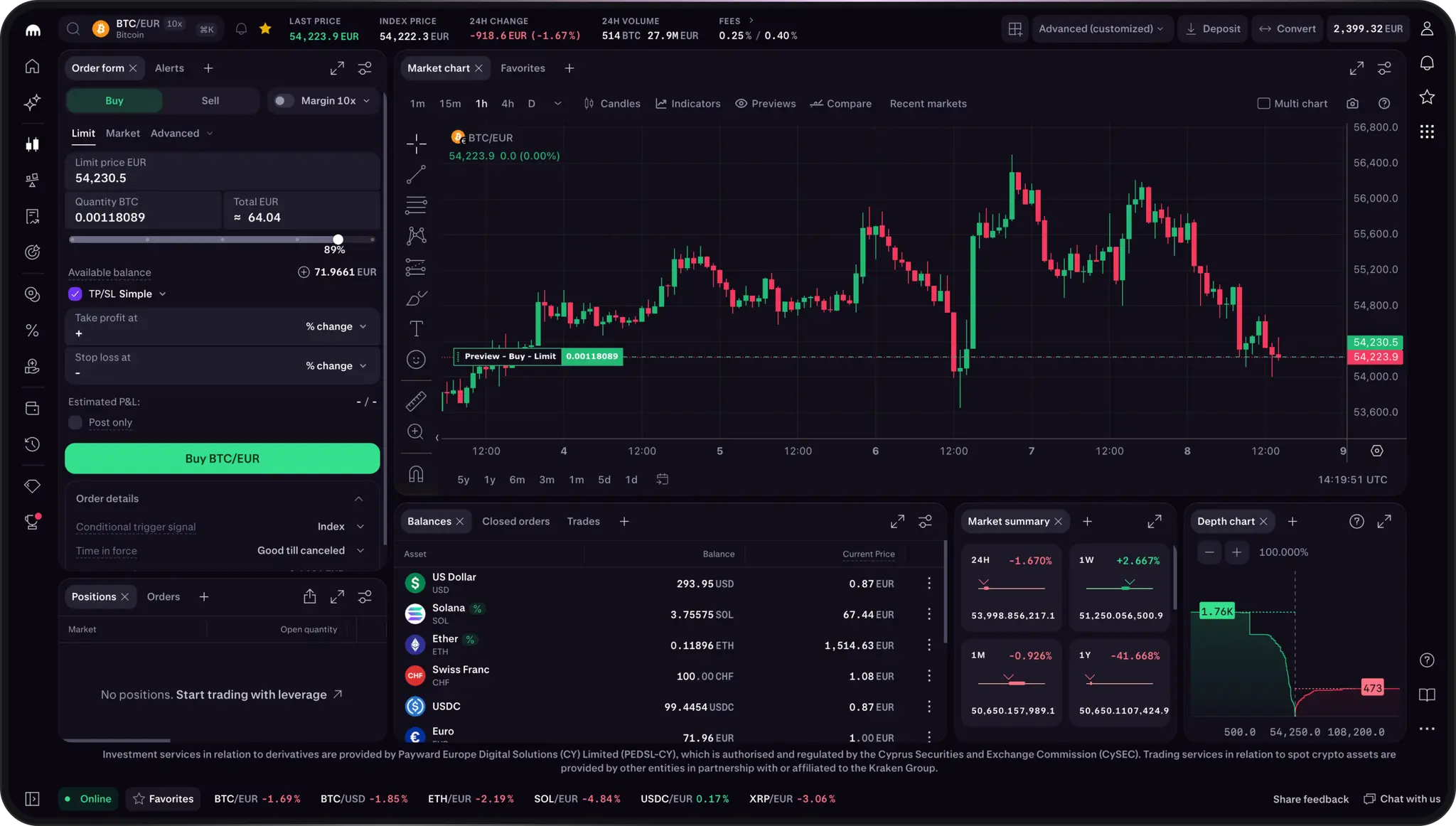
For fees, Kraken should be compared using the user’s expected spot size, conversion route and, where available, derivatives tier; a low headline rate does not compensate for a wide quote or expensive withdrawal. Margin may be less central for a spot-first user, but any derivatives account still needs a clear isolated or cross-margin explanation. Its custody profile should be evaluated through account protection, withdrawal controls, recovery procedures and the user’s ability to move assets out without friction.
For security-sensitive users, the first test should include strong account authentication, withdrawal-address controls, a small deposit, a low-risk limit order, a reduce-only close, and a complete withdrawal. Do not infer that a secure account makes a leveraged position safe; liquidation and market risk remain separate.
Pros
- Security and account-protection posture suit cautious users.
- Compliance-first access is useful for regulated-workflow comparisons.
- A simpler product surface can reduce strategy distraction.
- Custody and withdrawal controls are easy to include in a review.
Cons
- Perpetual availability depends heavily on jurisdiction.
- Market breadth may be narrower than international venues.
- Lower depth can matter for larger or less liquid orders.
- Fee economics may be less competitive for small traders.
Bitget: retail trading access, strategy products, and execution caveats
Bitget is relevant for users who want an accessible retail trading interface and may also encounter spot markets, copy-trading or automated strategy products. The public Bitget platform should be checked for the markets, order, deposit and account surfaces actually available in the target region. A strategy product is not a substitute for understanding the underlying spot or perpetual position.
The key question is whether the user can see the position size, margin mode, funding, liquidation price, and realized drawdown without relying on a performance leaderboard. Copy-trading results can emphasize past returns while leaving the timing, leverage, fees, and maximum drawdown less prominent. Start with manual low-notional trading and only evaluate a strategy product after the basic close and withdrawal path works.
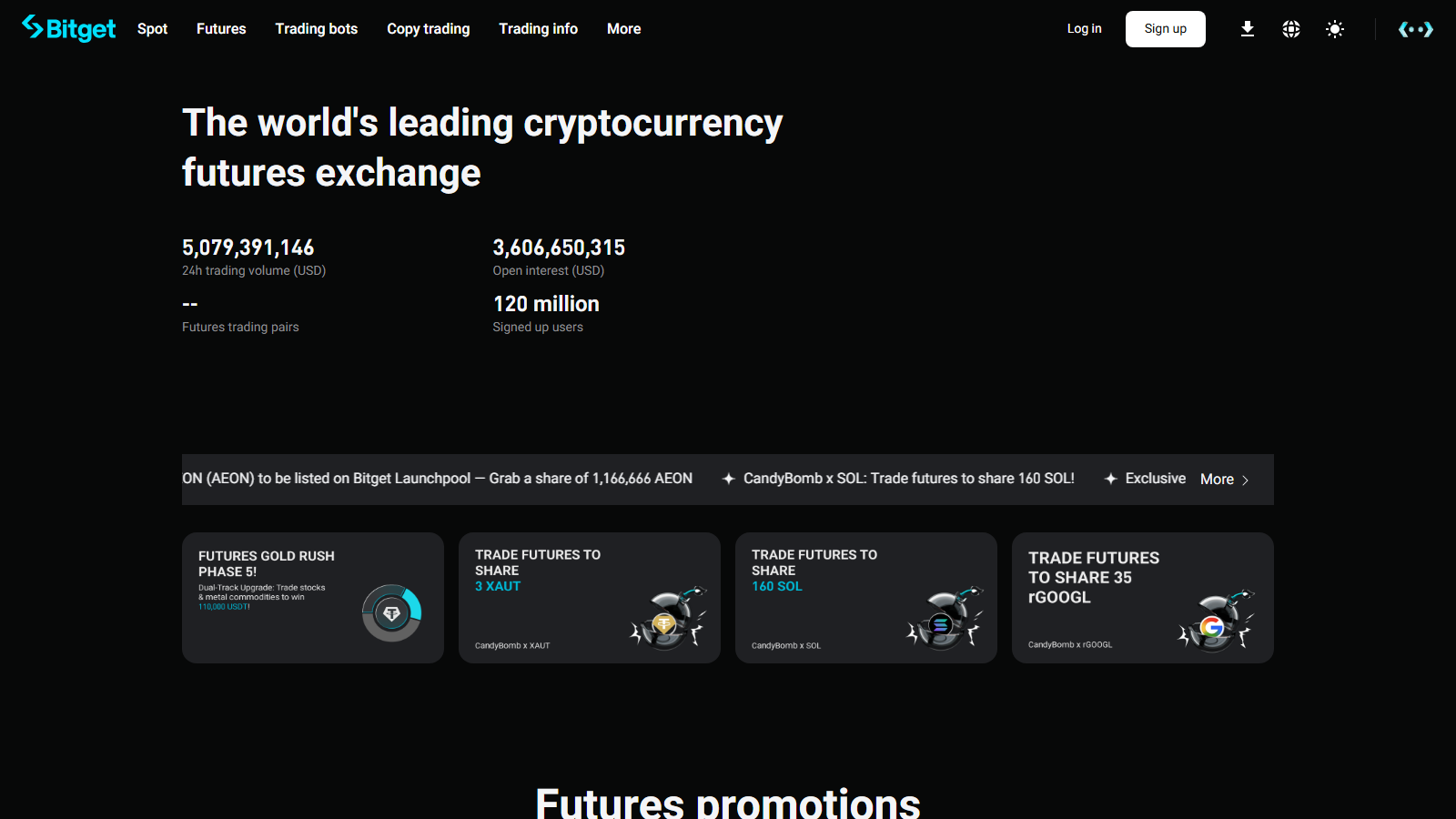
Bitget fees should be checked for the manual spot or perpetual trade before any copy-trading or strategy fee is considered. Margin belongs to the underlying position: copy trading does not remove leverage, funding or liquidation exposure. Custody also remains centralized, while strategy products add another layer of account, withdrawal and counterparty dependence.
Pros
- Retail-oriented navigation makes market discovery accessible.
- Copy-trading and strategy products offer additional workflows.
- Broad contract coverage supports altcoin research.
- Manual trading can be tested before strategy products.
Cons
- Copy-trading returns can hide drawdown and timing risk.
- Strategy products add execution and counterparty dependencies.
- Long market lists can include thin or unstable contracts.
- Custody and withdrawals remain exchange-level risks.
Coinbase: compliance-first access and narrower product scope
Coinbase belongs in the comparison when jurisdiction, institutional onboarding and a compliance-first custody relationship matter more than the widest trading or perpetual contract menu. The relevant route may be Coinbase International rather than the retail platform, so confirm the exact legal entity, eligible region, collateral route and product scope before treating it as a practical alternative.
Coinbase fees should be compared across the user’s actual spot, conversion and international derivatives route, including spread and withdrawal cost rather than only the posted trading tier.
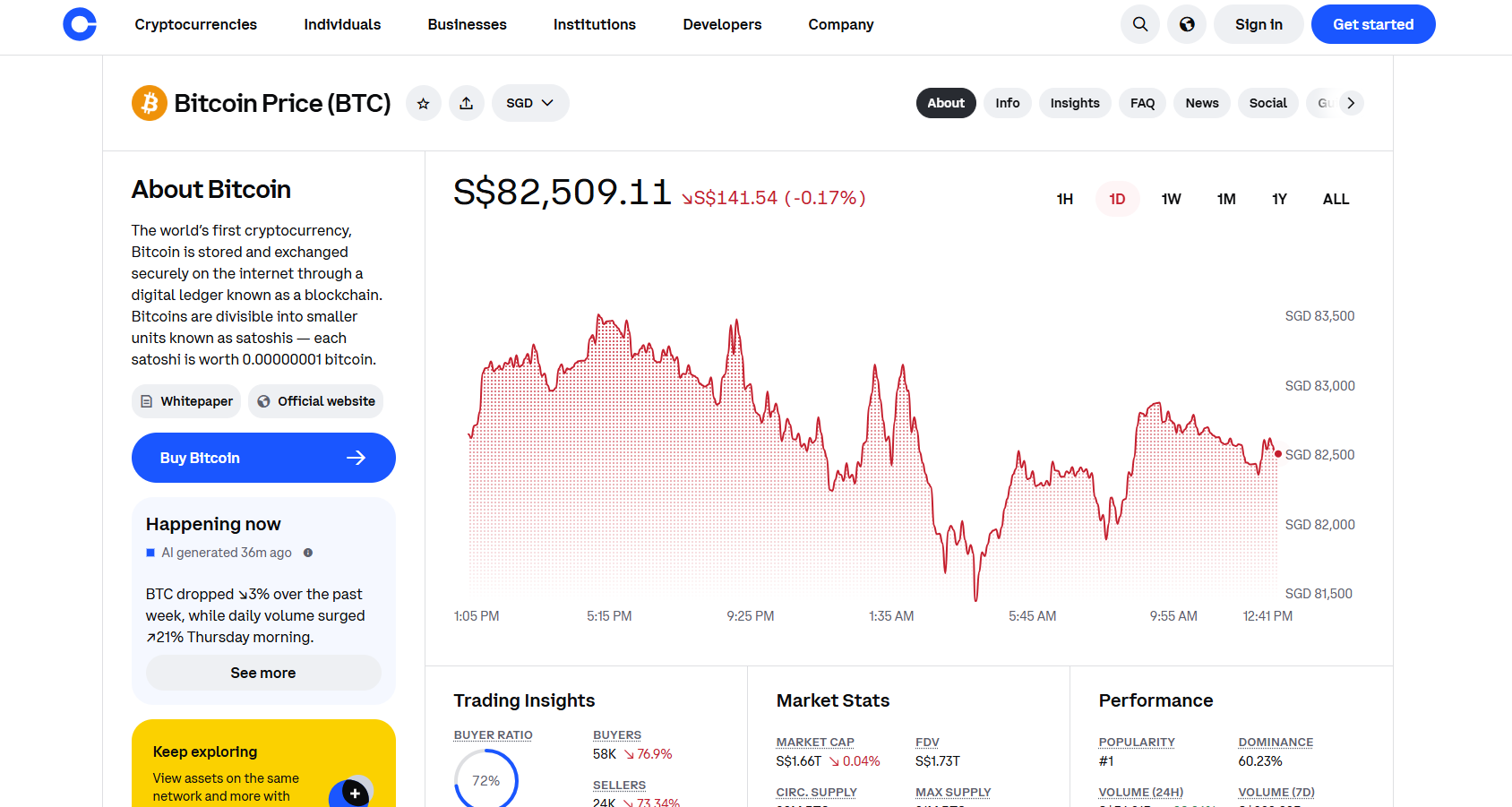
Margin may be unavailable or product-specific for the user’s region, so do not assume that a retail account and Coinbase International provide the same leverage or collateral treatment. Custody is a core part of the choice: account access, institutional onboarding, withdrawal approval and the legal entity holding the assets must all be clear.
Pros
- Compliance-oriented onboarding can suit institutions with stricter access requirements.
- An existing Coinbase account relationship may reduce onboarding friction.
- The custody and account boundary is easier to explain than a self-custody protocol.
- Institutional users can evaluate access and withdrawal controls in a clear framework.
Cons
- Contract coverage and eligibility can be narrower than international venues.
- Regional restrictions may prevent a user from opening the intended market.
- A compliance-first route is not automatically cheaper or deeper at every size.
- Exchange custody still creates counterparty and withdrawal dependence.
BitMEX: derivatives history with a narrower current comparison
BitMEX is relevant because it has a long derivatives history and a product design built around perpetual contracts. Treat it as a specialist benchmark for contract mechanics and operating history, not as a universal default for market breadth or regional access.
BitMEX fees should be evaluated on the exact perpetual contract, including maker/taker charges, funding and the spread at the intended size.
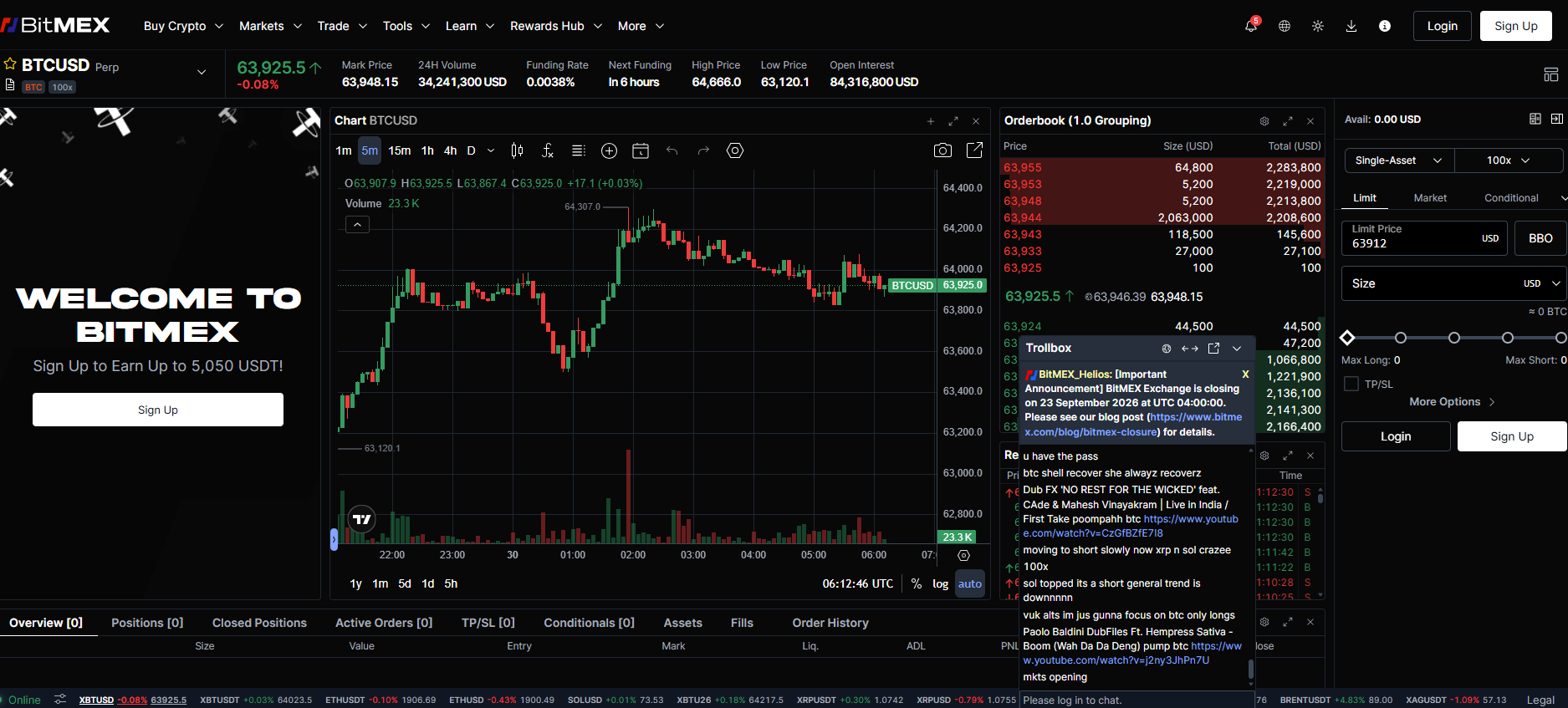
Margin is not a side detail: verify leverage limits, maintenance requirements, liquidation rules and how collateral is displayed before comparing it with a spot-first CEX. Custody remains account-based and centralized, so regional eligibility, deposit and withdrawal controls, and recovery access limit its usefulness beyond the trading venue itself.
Pros
- Long derivatives operating history provides a useful product-design benchmark.
- Perpetual-focused positioning keeps the comparison centered on derivatives mechanics.
- Experienced derivatives users may find the contract terminology familiar.
- A narrower product surface can reduce unrelated account-product distraction.
Cons
- Product breadth may be smaller than the largest retail exchanges.
- Regional access and account eligibility can limit practical use.
- Lower depth on a chosen contract can increase execution cost.
- Historical reputation does not prove current liquidity or withdrawal quality.
Gate: broad asset discovery with market-by-market verification
Gate is useful when the reader needs to discover a wide range of altcoin assets and perpetual contracts. Use it for discovery, then test each candidate for spot or derivatives spread, depth, funding where applicable, listing status, liquidation rules where applicable and withdrawal availability.
The comparison should use the exact asset or contract rather than the brand. Record whether the account can buy or sell the asset, which collateral and fiat routes are accepted, how the fee is calculated, whether margin is displayed for derivatives, and whether the asset or remaining collateral can be withdrawn without a regional or product restriction.
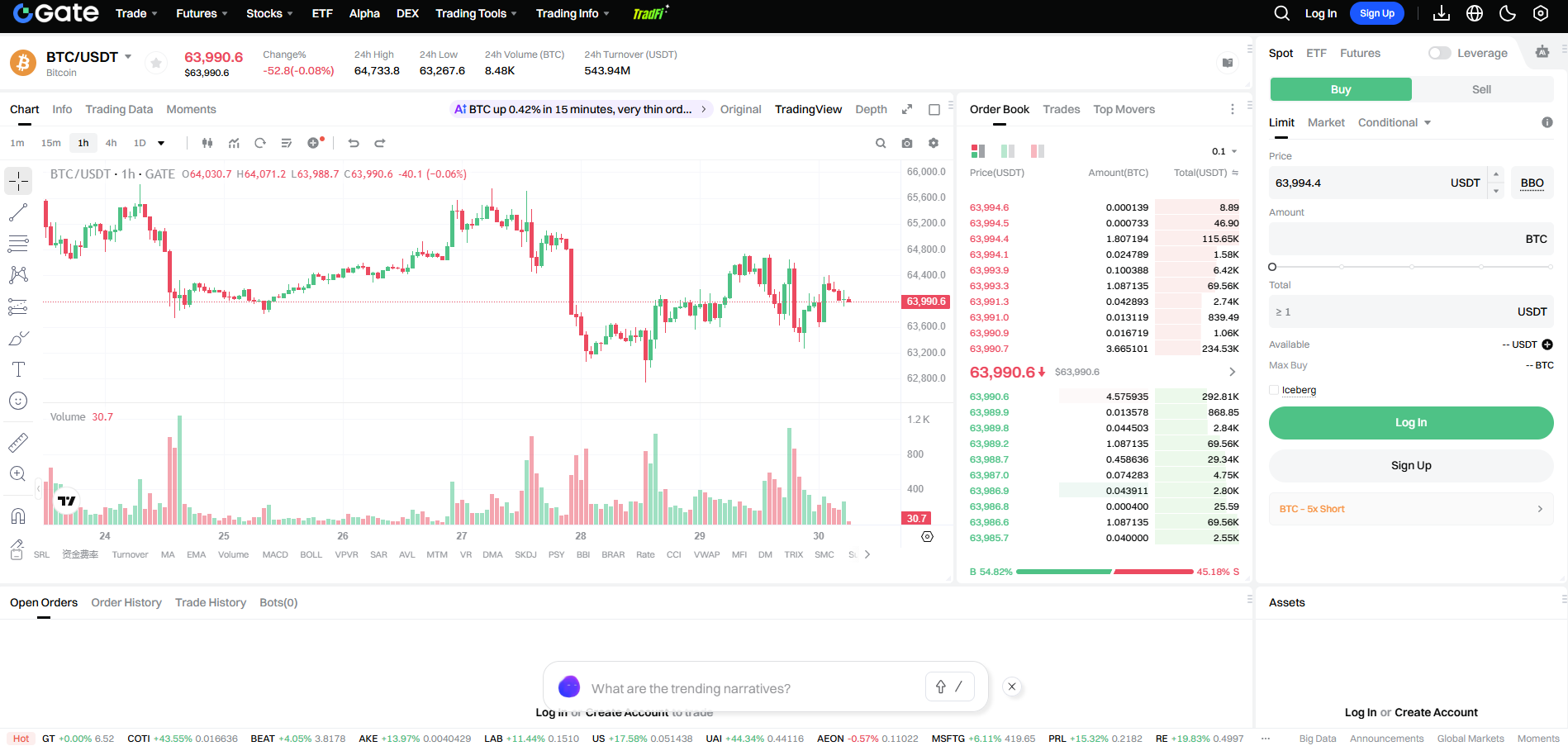
Gate’s fees should be checked per asset because a broad listing menu can hide different spreads, maker/taker tiers, funding costs and withdrawal charges. Margin only matters for contracts that support leverage, but the user should confirm the mode, collateral and liquidation rules for that exact market. Custody remains dependent on Gate’s account access, regional controls and withdrawal process, so listing breadth is not enough to make an asset practical.
Pros
- Broad contract discovery can surface markets unavailable on smaller venues.
- The wide listing surface helps researchers build an initial comparison set.
- Altcoin traders can test whether a specific market is actually accessible.
- A single account can simplify comparison across candidate contracts.
Cons
- Listing breadth can create false confidence when individual books are thin.
- Altcoin funding and price impact can change sharply during volatility.
- Contract status, leverage and withdrawal rules may differ by market.
- A broad market list does not replace a realized-fill and closeout test.
What matters more than the advertised fee
Centralized exchanges usually make maker/taker rates easy to find, but the displayed rate is only one layer of total cost. A spot purchase can become expensive through spread, conversion fees, deposit charges, withdrawal fees or an inconvenient fiat route. A perpetual position adds funding, slippage, liquidation fees and collateral risk. The maker and taker fee guide is useful for the fee calculation, while this article focuses on choosing the venue around the user’s full workflow.
For a $10,000 spot purchase, calculate the quoted spread, trading fee, conversion cost and eventual withdrawal fee. For a $10,000 perpetual round trip, add entry and exit fees, spread at the intended size, funding over the expected holding time and the cost of moving unused collateral out. If entry and exit each cost 0.05% on notional, trading fees alone are $10. If execution adds 0.10% on both sides, another $20 disappears before funding. A low VIP tier is irrelevant if the account cannot reach the required volume or if the order is filled at a worse price.
The same logic applies to leverage. The high-leverage exchange guide compares liquidation and maintenance-margin conditions, but the key point is simple: maximum leverage is a product limit, not a sensible position size. A venue offering 100x does not provide a better risk-adjusted trade than one offering 50x.
Centralized exchange decision matrix
| Cost or control | Binance | OKX | Bybit | Kraken | Bitget |
|---|---|---|---|---|---|
| Spot and asset coverage | BTC, ETH and target assets at the required size | Spot pairs plus derivatives overlap | Major pairs and active altcoins | Required spot assets in the target region | Retail spot and strategy-product overlap |
| Fiat and funding route | Deposit, conversion and withdrawal network | Funding path and account currency | Regional funding and withdrawal options | Fiat access and withdrawal controls | Funding route and supported settlement assets |
| Derivatives risk | Isolated/cross limits and contract access | Unified or portfolio margin allocation | Funding, liquidation and promotion risks | Whether the required derivatives product is offered | Whether copy-trading changes position visibility |
| Custody and account control | Withdrawal eligibility and account security | Account mode and withdrawal path | Account access and regional restrictions | Security controls and product eligibility | Custody, strategy and withdrawal separation |
| Failure to tolerate | Region blocks the required product | Margin complexity affects the user’s workflow | High leverage distracts from execution quality | Required asset or product is unavailable | Strategy drawdown is unclear |
Treat this matrix as a routing filter, not a live ranking. It deliberately avoids invented fee scores and mixed-date volume numbers. First remove exchanges that cannot support the user’s assets, funding route or jurisdiction. Then compare the remaining venues using the same notional, fee tier, holding period and withdrawal route. The lowest-fee perpetual exchange guide is only relevant when the user’s workflow includes perpetuals.
Conclusion
Binance is the depth-first all-purpose candidate, OKX is the advanced account candidate, Bybit is the active trading candidate, Kraken is the security-first comparison, Coinbase is the compliance-first route, Bitget is the retail strategy-product candidate, Gate is the broad asset-discovery option, and BitMEX is the specialist derivatives benchmark rather than a universal CEX choice. These labels only become useful after confirming the user’s assets, funding route, region, custody preference and intended trading product.
The right choice is the exchange that completes the user’s whole route: deposit or fiat conversion, spot purchase or derivatives entry, account protection, position or balance management, and withdrawal. Compare the full cost rather than the headline fee. A centralized exchange is suitable when its liquidity and convenience outweigh the custody, eligibility and product risks the trader can actually manage.
FAQs
Which centralized exchange is best for most users?
Start with Binance, OKX, Kraken and Coinbase as a broad comparison set, then remove any venue that does not support the user’s assets, funding route or region. The largest venue by volume is not automatically the best fit for every custody preference, product or withdrawal path.
Is a centralized exchange safer than a self-custody wallet?
It is simpler for account-based trading but introduces custody, account, withdrawal, jurisdiction and counterparty risk. A self-custody wallet gives the user direct control but shifts seed phrase, signing and transaction security to the user. The safer choice is the boundary the user can understand and manage.
Which fees should I compare before choosing a CEX?
Compare spot or derivatives trading fees, spread, conversion cost, deposit and withdrawal charges, funding for perpetuals, and any balance or account requirements. A lower maker/taker rate does not help if the exchange gives a worse quote or makes the preferred withdrawal route expensive.
Should I keep long-term holdings on the exchange?
An exchange can be convenient for active trading, but convenience does not remove platform, account-access or withdrawal risk. Keep only the working balance needed for the intended activity unless the user has specifically assessed the exchange’s custody and recovery arrangements.
Disclaimer: This article is for informational purposes only and does not constitute financial or investment advice. Cryptocurrency and digital asset markets carry significant risk. Always do your own research before making decisions.