


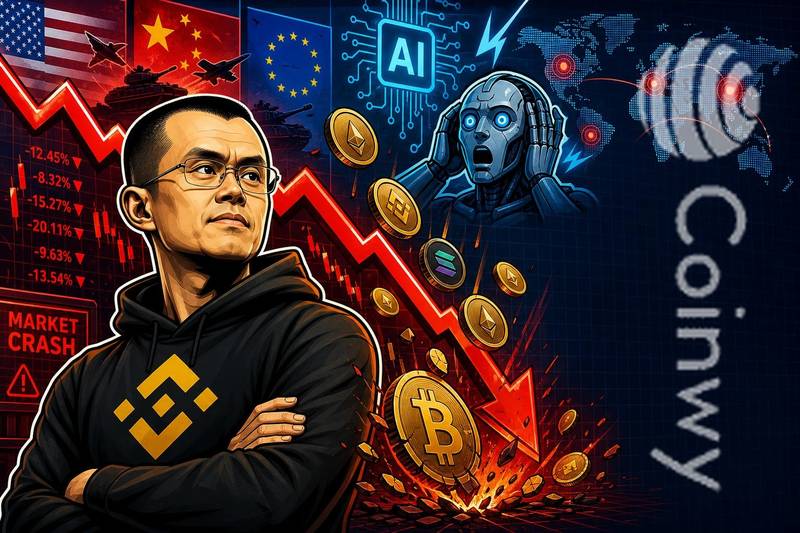
Binance founder Changpeng Zhao, known as CZ, has attributed the current crypto sell-off to a combination of AI-driven capital rotation, geopolitical uncertainty and the natural rhythm of market cycles. The comments frame the downturn not as a single-cause event but as the result of several forces converging at once.
CZ laid out the three-part thesis in remarks reported by CoinDesk, pointing to AI hype, global tensions and crypto’s roughly four-year cycle as the drivers behind a weak 2026 for digital assets. For related coverage, see MoonPay expands back-office crypto infrastructure through Entendre deal.
Why CZ Says AI Is Part of the Crypto Sell-Off Story
AI stocks have drawn significant investor attention this year, and CZ argued that this shift in focus has pulled capital away from crypto. The logic is straightforward: when a competing narrative offers perceived upside, risk capital migrates. For related coverage, see Spain Regulator Rules Out Extension for Non-MiCA-Compliant Crypto Companies.
Separate CoinDesk market coverage noted that AI stocks have been luring buyers at the expense of tokens like Dogecoin and Hyperliquid’s HYPE, which led weekly crypto losses. The pattern supports CZ’s argument that AI is not just a technological shift but an active competitor for the same pool of speculative capital.
CZ presented AI as one contributing factor rather than the sole explanation. The distinction matters because it frames the sell-off as a multi-layered event, not a simple rotation trade. Recent Bitcoin ETP outflows pushing rolling one-year flows negative suggest that the capital drain extends beyond retail sentiment alone.
How Geopolitical Tensions Add Pressure to Crypto Markets
CZ also pointed to geopolitical friction as a headwind for crypto. In periods of heightened global tension, investors tend to reduce exposure to volatile assets, and crypto sits firmly in that category.
The mechanism is indirect but well-documented. Geopolitical risk dampens overall risk appetite, tightens liquidity conditions and pushes capital toward perceived safe havens. For crypto, which relies heavily on speculative inflows, the effect can be outsized relative to traditional equities.
CZ did not specify particular conflicts or flashpoints, keeping the framing broad. That generality is itself informative: the argument is about a sustained backdrop of uncertainty rather than any single event. The dynamic has also complicated regulatory progress in multiple jurisdictions, as lawmakers like Senate Democrats probing crypto-related deals add another layer of political complexity to the market.
Why Market Cycles Still Matter in Any Crypto Pullback
The third pillar of CZ’s explanation is the most structural. Crypto markets have historically moved in roughly four-year cycles, often tied loosely to Bitcoin halving events. Pullbacks within these cycles are common, even during broader bullish phases.
CZ’s invocation of cycles serves a dual purpose. It normalizes the current weakness as part of a recurring pattern while also implicitly suggesting that the downturn is temporary. Cycle-based thinking contrasts with the panic-driven narrative that often dominates social media during sell-offs.
The three factors CZ identified, AI competition, geopolitical pressure and cyclical behavior, are not independent. AI hype intensifies the capital rotation that cycles naturally produce, while geopolitical risk accelerates the risk-off moves that define cycle downturns. Observers tracking broader criticism of concentrated Bitcoin strategies have noted similar structural concerns about how crypto capital is allocated during these periods.
Whether CZ’s framework proves accurate will depend on how these forces evolve. But as an explanation for the current downturn, the thesis has the advantage of matching observable market behavior: capital flowing to AI, risk assets weakening amid global uncertainty, and crypto following a pattern it has repeated before.
Disclaimer: This article is for informational purposes only and does not constitute financial or investment advice. Cryptocurrency and digital asset markets carry significant risk. Always do your own research before making decisions.